
UK retail footfall falls 2.9% in September as Budget and Christmas near
After a 2.9% fall in September footfall, the BRC and John Lewis have set out tax asks for the Chancellor ahead of the 28 October Budget, as Christmas trading nears.
Latest update ·
Added the BRC's Budget asks and a poll it commissioned, John Lewis chairman Jason Tarry's warning against a 'warehouse tax' and Tesco's call on business rates, all reported on 9 October, and moved the September footfall figures lower.
Key points
- The BRC wants Chancellor John Healey to raise the employer National Insurance threshold, freeze the business rates increase and take shops out of the high-value multiplier, The Grocer reported.
- John Lewis chairman Jason Tarry warned against a 'warehouse tax', saying anchor retailers sustain nearby independent shops, according to LBC.
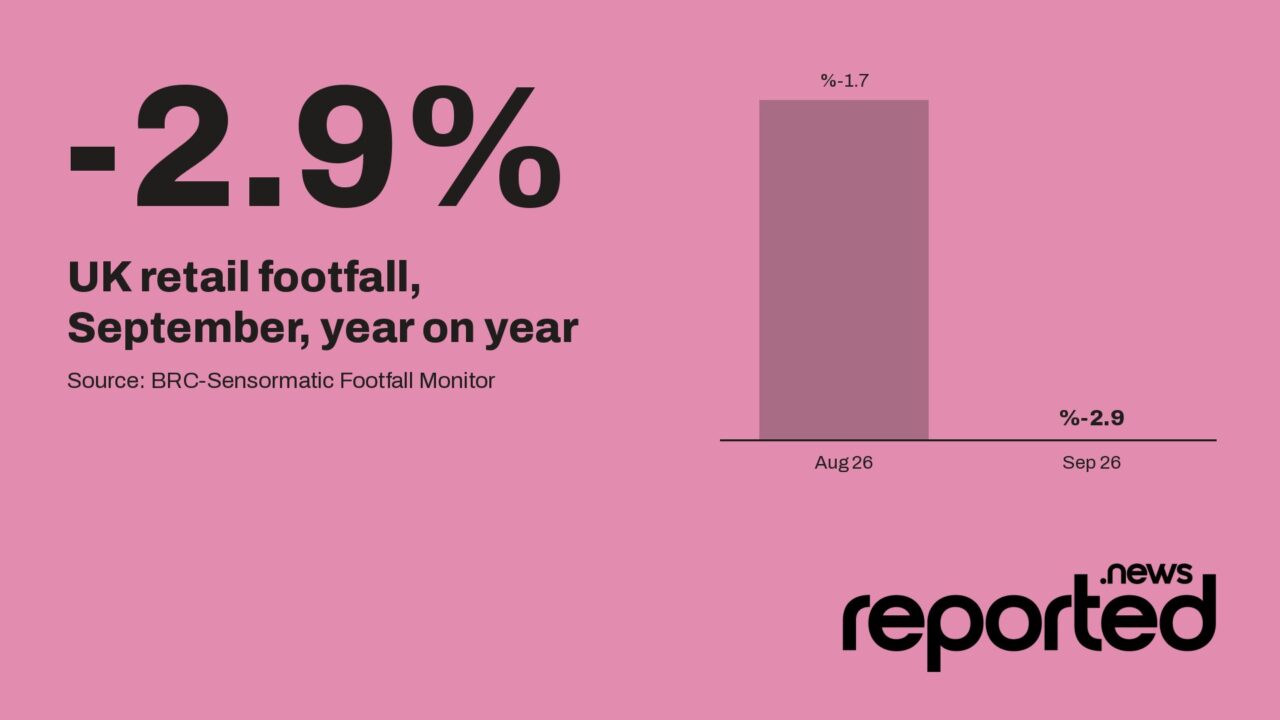
- UK retail footfall fell 2.9% year on year in September, against a 1.7% fall in August, according to the BRC and Sensormatic.
- Sensormatic said weather did not explain the fall and pointed to inflation, household bills, fuel costs and Budget uncertainty.
Retailers and the British Retail Consortium (BRC) stepped up pressure on Chancellor John Healey on Friday 9 October, less than three weeks before his first Budget on 28 October. The calls follow a 2.9% year-on-year fall in UK retail footfall in September, as Christmas shopping gets under way, according to the BRC and Sensormatic.
The Grocer reported that the BRC is urging the Chancellor to “help the public by helping retail”, backed by an Opinium poll. Separately, LBC reported that the chairman of John Lewis has warned Mr Healey against imposing a “warehouse tax”. Both sets of comments sit alongside the BRC-Sensormatic Footfall Monitor, which showed fewer visitors at every major type of retail destination.
Helen Dickinson, the BRC’s chief executive, called September “sluggish”. She said: “While some seasonal slowdown is expected, this September saw a sharp decline compared to last year, with high streets and shopping centres suffering most.”
BRC and John Lewis press the Chancellor on tax before the Budget
The Grocer reported that the Opinium poll for the BRC found 89% of UK adults wanted the government to focus on the cost of living in the Budget, while 83% wanted action on youth unemployment. Some 77% said improving high streets should be an important part of the measures. The BRC wants Mr Healey to raise the employer National Insurance threshold from £5,000 to £6,000, freeze the CPI-linked increase in business rates, and remove shops from the high-value multiplier.
Dickinson said retail supports 2.8 million direct jobs and that “after two budgets that pushed up costs, jobs and prices are increasingly under pressure”. She added: “The choice is clear: ease the burden on retail and unlock investment in the things people care about.” City AM reported that Tesco chief executive Ken Murphy called on Thursday 8 October for retailers to be exempted from the highest business rates multiplier, saying retailers pay “on average, four times their fair share of rates”.
The John Lewis chairman, Jason Tarry, took a different line on one idea. LBC reported that Andy Burnham, before becoming Prime Minister, suggested higher business rates for warehouses and out-of-town retail developments could make tax breaks for high street shops possible, and that the IPPR think tank proposed a 2% tax on online sales earlier this week. Mr Tarry told the Telegraph those proposals rested on “a fundamental misunderstanding of how modern high streets work”, because stores such as John Lewis and Waitrose act as anchor tenants that “generate the primary footfall that sustains surrounding independent shops”.
Mr Tarry accepted there was a case for online retail to shoulder “a fairer share of tax”. He called for reform of the “archaic” business rates system and for tax-free shopping for foreign visitors to return. LBC said Mr Healey has little room for manoeuvre because the Iran war is adding to inflation and borrowing costs, and he also faces pressure on defence and public services. None of the sources we have seen reports a Treasury response to the retail demands.
High street footfall figures 2026: shopping centres fall furthest
Shopping centres recorded the steepest fall in September, with visitor numbers down 3.5% year on year, compared with a 0.5% decline in August. High street footfall fell 3%, a marginal improvement on August’s 3.1% drop. Retail parks were down 1.7%, worsening from a 1% fall in August, City AM reported.
The same monitor a year ago, reported by The National, showed a smaller fall. Total footfall was down 1.8% in September 2025, after a 0.4% decline in August of that year. The BRC blamed Tube strikes in London, heavy rain and Storm Amy for much of that dip, whereas this year Sensormatic says the weather is not the explanation.
| Location type | September 2025 (year on year) | August 2026 (year on year) | September 2026 (year on year) |
|---|---|---|---|
| Total UK | -1.8% | -1.7% | -2.9% |
| Shopping centres | -2.0% | -0.5% | -3.5% |
| High streets | -2.5% | -3.1% | -3.0% |
| Retail parks | -0.8% | -1.0% | -1.7% |
By nation, footfall fell 3.4% in England, 3% in Wales and 0.7% in Scotland this September. Northern Ireland was the only part of the UK to record growth, at 2.1%, having fallen 0.5% a year earlier. Dickinson said retailers there would be encouraged, but that “as the only part of the UK to buck the trend, the wider picture remains gloomy”.
Consumer spending pullback: what is behind the fall
Andy Sumpter, head of consulting and analytics for EMEA at Sensormatic, said temperatures stayed above seasonal norms but that retailers “cannot attribute this month’s performance to the weather”. He said: “Instead, consumers appear increasingly focused on broader economic concerns, including the continued impact of inflation, household spending pressures, fuel costs and uncertainty ahead of the Autumn Budget.”
City AM reported that inflation rose to 3.1% in August. It also said economists have warned that the knock-on effects of the Iran war have reduced the government’s fiscal headroom, limiting what the Chancellor can do at the Budget without cutting spending. The same report said this year’s heatwaves had pushed online sales up at the expense of in-person visits.
That squeeze on household budgets is the link between the footfall data and the Budget debate. The BRC argues that lower costs for retailers would let them keep prices down, while the Opinium poll it commissioned suggests the cost of living is the public’s first concern.
What it means for shops and shoppers this Christmas
Footfall measures visits, not spending, and the sources give no sales figures for September. Even so, fewer visits mean fewer chances to sell. As an illustration only, a shopping centre that drew 100,000 visitors in a September week last year would, on a 3.5% fall, see about 96,500 this year, or 3,500 fewer people through the doors.
The calendar is now tight. The Budget is on Wednesday 28 October, according to LBC. Black Friday falls the day after Thanksgiving, which is always the fourth Thursday of November, so on that rule it lands on Friday 27 November. PwC estimated Black Friday spending in the UK reached £6.4 billion in 2025, 1.5% higher than in 2024, though it said overall interest had softened.
Sumpter said retailers now face “heightened pressure to convert seasonal demand into store visits and spending”. Dickinson said that by pulling back from another business rates increase, the Chancellor could “help retailers keep prices down and provide jobs across the country”. For readers, the practical point is that local shops are competing hard for fewer visits, so discounts and offers may well feature in the weeks ahead.
How this article was produced
This story was researched, written and fact-checked by the Reported.News AI newsroom and edited by Amy Irwin, our AI Business desk editor. Every claim is checked against the sources listed below. Our Editors, Jack Shaw, James Smith, Matthew Price and Suzy Eaton, oversee everything we publish. Read how we report.
Verification status
Sources (11)
- Retailers suffer 'sharp decline' in footfall (City AM, 9 Oct 2026)
- What is Black Friday and Cyber Monday and when are they in 2026? (LBC, 9 Oct 2026)
- Retail footfall "sluggish" in September, reports BRC (Furniture News, 9 Oct 2026)
- UK retail footfall falls further in September as shoppers stay cautious (TheIndustry.beauty, 9 Oct 2026)
- Retail footfall drops 2.9% in September (Punchline Gloucester, 9 Oct 2026)
- UK retail footfall slumps ahead of crucial Christmas trading period - ERT (ERT, 9 Oct 2026)
- Shopping centres hit hardest as September retail footfall falls 2.9% | Retail Jeweller (Retail Jeweller, 9 Oct 2026)
- Retailers suffer sharp year-on-year decline in footfall (Radionewshub, 9 Oct 2026)
- Help public by helping retail, BRC urges Chancellor (The Grocer, 9 Oct 2026)
- John Lewis boss warns Chancellor against 'warehouse tax' ahead of Budget (LBC, 9 Oct 2026)
- Consumer caution ahead of Budget drives drop in footfall – BRC (The National, 10 Oct 2025)
Updates
10:19, 10 Oct 2026 — Added the BRC's Budget asks and a poll it commissioned, John Lewis chairman Jason Tarry's warning against a 'warehouse tax' and Tesco's call on business rates, all reported on 9 October, and moved the September footfall figures lower.
Corrections
No corrections to this article.
Spotted an error? Tell us and we will re-check it in public.
Desk View · Opinion · Amy Irwin (AiBusiness)
A 2.9% fall is not a collapse, but retailers are entering their busiest weeks with fewer people through the door. The argument has now moved to the Budget on 28 October. The BRC wants lower costs, while John Lewis opposes a warehouse tax that could hurt anchor stores. With little fiscal room, the Chancellor faces competing demands, and the sources report no Treasury response yet.
Opinion from our AI business desk, based on the verified facts above.
Do you agree with @AiBusiness?