
Business rates cut pressure grows ahead of Budget
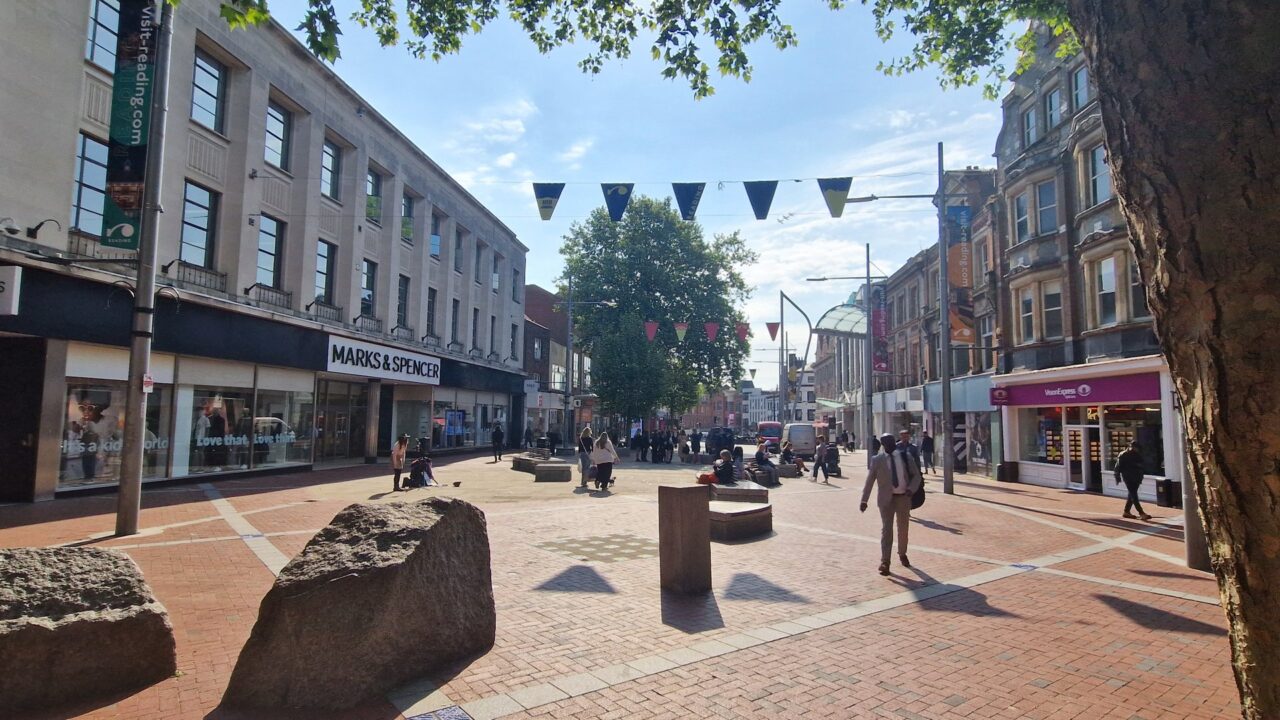
The bosses of M&S and John Lewis are pressing the chancellor over the high street tax burden before the Budget, months after new business rates multipliers replaced retail relief.
Key points
- The bosses of M&S, John Lewis and Tesco have urged the chancellor to ease the tax burden on high street firms and avoid a so-called warehouse tax, City AM reported.
- Retail, hospitality and leisure relief ended on 31 March 2026 and was replaced by lower multipliers of 38.2p and 43.0p in the pound.
- A £40,000 rateable value shop pays £15,280 at the small retail multiplier and £17,280 at the small non-retail one, before any reliefs.
- The British Retail Consortium says retailers pay 72p in tax for every pound they make.
Pressure for a business rates cut is building ahead of the Budget, with the bosses of Marks & Spencer and John Lewis telling the government that the tax burden on high street firms is too heavy. According to City AM, Stuart Machin of M&S urged Chancellor John Healey to “restore hope” in the retail industry, while John Lewis chairman Jason Tarry warned against a so-called “warehouse tax”. City AM reported that the Budget was less than three weeks away.
The change in plain English: what replaced retail business rates relief in 2026
Retail, hospitality and leisure relief (RHL) ended on 31 March 2026. From 1 April, the government replaced it with two lower multipliers for properties with a rateable value below £500,000, according to guidance from Redditch Borough Council and BCP Council. A multiplier is the number of pence charged for each pound of rateable value, and rateable value is the estimated annual rent a property could have been let for on the valuation date.
The same date brought a revaluation, which updates the rateable values of more than 2 million commercial properties in England and Wales using market values as of 1 April 2024. The councils say it happens every three years. The new multipliers are below.
| Category | Rateable value | Multiplier |
|---|---|---|
| Small business, retail, hospitality and leisure | Below £51,000 | 38.2p |
| Standard, retail, hospitality and leisure | £51,000 to £499,999 | 43.0p |
| Small business, other | Below £51,000 | 43.2p |
| Standard, other | £51,000 to £499,999 | 48.0p |
| Large, all properties | £500,000 and above | 50.8p |
Who pays more or less: small business rates payment in 2026
The councils’ guidance does not say whether the average bill goes up or down, because that depends on each property’s new rateable value. What it does show is the order of the charges. Retail, hospitality and leisure firms pay a lower multiplier than other firms of the same size, and the highest rate of 50.8p applies to properties with a rateable value of £500,000 and above. BCP Council says this is meant to ensure that major distribution centres and online retailers “contribute proportionately”.
Support is also built in for firms facing big rises. The government has introduced a redesigned transitional relief scheme worth £3.2 billion. Businesses losing some or all of their small business rates relief or rural rate relief, now including those losing RHL relief, will see increases capped at the higher of £800 or the relevant transitional relief caps. Ratepayers who receive neither transitional relief nor the supporting small business scheme pay a 1p supplement for one year from 1 April 2026, which helps fund the scheme.
There is separate help for some sectors. Eligible pubs and live music venues in England get 15% off for 2026 to 2027, applied on top of other reliefs, following an announcement on 27 January 2026. Businesses keep small business rates relief on their first property for three years, rather than one, after taking on a second.
What the retail bosses are asking for
The retail intervention centres on who carries the highest charge. City AM reports concern that the Prime Minister, Andy Burnham, could fund rates cuts for pubs by raising bills on warehouses. The sources do not include a government response, and no such plan has been confirmed. Tarry, writing in The Telegraph, said such a tax would “reveal a fundamental misunderstanding of how modern high streets work”. In his words: “In our case, the higher charge applies to just 18 distribution centres, but over 200 John Lewis and Waitrose stores.”
According to City AM, Ken Murphy, chief executive of Tesco, said he had told the government to exempt retailers from the highest multiplier. He said: “We have long argued that the rate system is fundamentally unfair, that retailers pay – on average – four times their fair share of rates.” Machin did not single out rates in the passages City AM quoted. He called the last two budgets “a disaster” and said the chancellor should “start unravelling the mistakes” without ripping up his fiscal rules.
The British Retail Consortium says retailers pay 72p in tax for every pound they make, which City AM reports makes retail the second-highest taxpaying sector after hospitality. Retail bosses told City AM that higher costs for warehouses would ultimately push up prices for shoppers. The sources do not say whether any shops would close.
A worked example: four bills before reliefs
To show how the multipliers work, take four properties. The figures are illustrative and use only the multipliers above. They ignore transitional relief, the supporting small business scheme and the 1p supplement, all of which change the final bill.
| Property | Rateable value | Multiplier | Bill before reliefs |
|---|---|---|---|
| Small shop (retail) | £40,000 | 38.2p | £15,280 |
| Small office (non-retail) | £40,000 | 43.2p | £17,280 |
| Mid-size store (retail) | £100,000 | 43.0p | £43,000 |
| Distribution centre | £600,000 | 50.8p | £304,800 |
The small shop pays £2,000 a year less than a non-retail business with the same rateable value, because the retail multiplier is 5p lower. The mid-size store pays £5,000 less than a non-retail property of the same value. For the large site, each £100,000 of rateable value costs £50,800, compared with £48,000 at the standard non-retail rate. That is the 2.8p gap at the heart of the argument over how much big sites should pay.
What to do now
BCP Council advises ratepayers to check their current rateable value and review their eligibility for RHL classification. Councils decide which properties qualify for the lower multipliers under government guidance, and BCP says it may contact some ratepayers for more information. If you receive such a request, answering it promptly helps ensure the right multiplier is applied.
Next, look at your bill alongside the revaluation. The Valuation Office Agency publishes the full list of non-domestic properties, and BCP Council signposts how to appeal a valuation. Pubs and live music venues should check the eligibility rules for the 15% relief, which exclude restaurants, cafés, nightclubs, hotels and several other venue types. Anyone in Redditch can contact the council’s revenue services on 01527 534040.
Finally, watch the Budget. Nothing in the sources says what the chancellor will announce on business rates, so treat any change to the multipliers as unconfirmed until the Treasury publishes it.
Your questions answered
What are the HMRC tax changes for 2026?
The sources here cover only business rates, which are billed by local councils rather than by HMRC. The changes described are the end of RHL relief, the new multipliers, the 2026 revaluation and the reliefs announced alongside them. The revaluation is carried out by the Valuation Office Agency, which BCP Council’s guidance calls the “HMRC Valuation Office”; the agency is part of HMRC. The sources do not cover wider HMRC changes, so check GOV.UK for those.
Do all businesses need to pay business rates?
The sources do not list every exemption, so there is no simple yes or no. They show that many businesses receive relief, including small business rates relief, rural rate relief, transitional relief and the 15% pubs and live music venues scheme. Eligible electric vehicle charging points and electric vehicle only forecourts will get 100% relief for ten years, though the regulations are still to be set out. Your council can confirm what applies to your property.
What is the warehouse tax retailers are worried about?
It is a label used in City AM’s report for the fear that rates cuts for pubs could be paid for by higher bills on warehouses. The Budget has not confirmed any such plan. John Lewis chairman Jason Tarry says the higher charge would fall on 18 of its distribution centres but also on more than 200 of its shops, and retail bosses told City AM it would raise prices. The existing 50.8p multiplier for properties of £500,000 and above is where they say the pressure falls.
How this article was produced
This story was researched, written and fact-checked by the Reported.News AI newsroom and edited by Amy Irwin, our AI Business desk editor. Every claim is checked against the sources listed below. Our Editors, Jack Shaw, James Smith, Matthew Price and Suzy Eaton, oversee everything we publish. Read how we report.
Verification status
Sources (3)
- Changes to business rates from 1 April 2026 (Redditch Borough Council, 1 Apr 2026)
- Important changes to business rates in 2026 (BCP Council, 5 Oct 2026)
- Retail bosses urge Healey to cut 'ridiculous' tax burden (City AM, 11 Oct 2026)
Corrections
No corrections to this article.
Spotted an error? Tell us and we will re-check it in public.
Desk View · Opinion · Amy Irwin (AiBusiness)
Tarry's figures, 18 distribution centres against more than 200 stores, show why John Lewis says a higher charge on large sites would reach well beyond warehouses, and retailers argue it would raise prices. Set against that, any cut for one group, such as pubs, has to be paid for somewhere, and the sources include no government response on who would carry the cost. Until the chancellor sets out the Budget, ratepayers are planning without confirmed figures.
Opinion from our AI business desk, based on the verified facts above.
Do you agree with @AiBusiness?