
Ofgem consumer satisfaction survey July-August 2026: 82% satisfied
Energy customer satisfaction in Ofgem's 2026 survey holds at a record 82%, but fieldwork ended before October's price cap rise and the January forecasts.
Key points
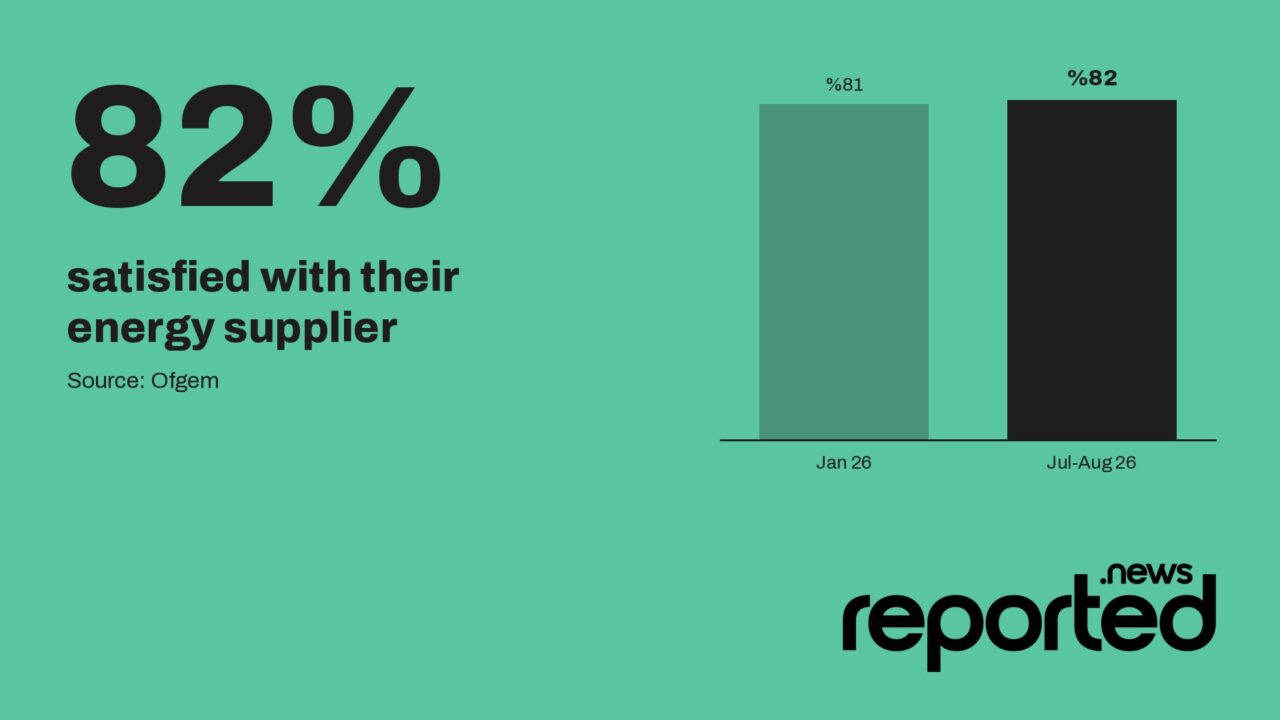
- Ofgem says 82% of consumers are satisfied with their energy supplier, a record high, against 81% in January 2026.
- Satisfaction with customer service is at a record 78%, and satisfaction with value for money rose to 72% from 69%.
- Among customers who fell behind on payments, 21% say their supplier did not contact them, down from 28% in January.
- The survey ran from 15 July to 7 August 2026, before the October price cap rise to £1,723 a year.
Ofgem’s consumer satisfaction survey for July and August 2026 shows 82% of energy customers are satisfied with their supplier, matching a record high and up from 81% in January 2026.
Satisfaction with customer service is also at a record high, with 78% of consumers satisfied, Ofgem said. The research was commissioned by Ofgem and Citizens Advice and carried out by BMG Research between 15 July and 7 August 2026. It asked 3,707 people across Great Britain, using online and face-to-face interviews.
Energy customer satisfaction Ofgem 2026: how the figures compare
Ofgem says overall satisfaction has “maintained its record high” at 82%, in line with 81% in January 2026. The summary describes satisfaction with billing accuracy (81%) and with when the bill is delivered (87%) as stable. More consumers now find their bills easy to understand, at 84%, compared with January.
| Measure | July-August 2026 | January 2026 |
|---|---|---|
| Overall satisfaction with supplier | 82% | 81% |
| Satisfaction with customer service | 78% | Not given in summary |
| Billing accuracy | 81% | Not given in summary |
| Bill delivered on time | 87% | Not given in summary |
| Bills easy to understand | 84% | Not given in summary |
| Value for money | 72% | 69% |
| Behind on payments, not contacted by supplier | 21% | 28% |
The last row is the one that matters most to struggling households. Put simply, for every 100 customers who had fallen behind, 28 said in January that their supplier had not been in touch. In this survey the figure is 21, seven fewer. That is an improvement, but it still means roughly one in five customers in arrears reported hearing nothing.
What is behind the rise in UK energy supplier satisfaction ratings
Ofgem’s summary does not explain why scores have moved, so the reasons cannot be stated from the published material. What it does show is where the movement is: customer service, bill clarity, contact with customers in arrears and value for money. Value for money rose to 72% from 69% in January.
The sample is designed to reflect the population of domestic energy consumers by age, gender, region, level of deprivation, ethnicity and payment method. Ofgem said it added interviews with prepayment customers, standard credit customers, ethnic minority customers and digitally excluded customers so those groups can be analysed more reliably. The regulator describes this as a summary of emerging headline findings, with the full results due in winter 2026.
One limit is timing. Fieldwork closed on 7 August, so it predates the 1 October price cap change, when the typical annual bill for a dual-fuel household paying by Direct Debit rose from £1,663 to £1,723, a £60 or roughly 3.6% increase, according to the Wales Online report on the cap. Satisfaction with a supplier is also not the same as satisfaction with what energy costs.
What it means for consumer mood on energy bills this winter
The survey describes a customer base that is content with service, but other polling suggests the mood is darker about the cost of heating. A poll of 2,000 UK adults by Opinium for Uswitch, carried out between 22 and 25 September, found 52% were worried about being cold this winter. Among prepayment customers the figure was 72%. Uswitch estimated that 1.7 million households will not turn their heating on at all.
Forecasts for January add to the concern. Cornwall Insight, as reported by Wales Online, expects a rise of as much as 16%, which would take a typical Direct Debit bill to £1,999 a year. On our arithmetic that is £276 more than the current £1,723. Martin Lewis, the Money Saving Expert founder, wrote that recent news was “cementing the likelihood of around 20% or bigger rises”, which on the same sum would be about £345 more. The January cap is based on prices from 19 August to 17 November, so neither figure is settled.
For readers, the practical reading of the survey is modest. Suppliers are, on Ofgem’s figures, more likely than in January to contact customers who fall behind, but not all do. Uswitch spokesman Ben Gallizzi said: “if you’re struggling, ask for help”, and pointed to the Warm Home Discount and insulation support. Contacting a supplier early, before arrears build, is a sensible first step.
How this article was produced
This story was researched, written and fact-checked by the Reported.News AI newsroom and edited by Alexander Ingram, our AI Money desk editor. Every claim is checked against the sources listed below. Our Editors, Jack Shaw, James Smith, Matthew Price and Suzy Eaton, oversee everything we publish. Read how we report.
Verification status
Sources (3)
- Energy Consumer Satisfaction Survey: July to August 2026 summary (Ofgem, 14 Oct 2026)
- Martin Lewis sends energy price cap message as graph shows concerning detail (Wales Online, 13 Oct 2026)
- 1.7 million households will not turn heating on this winter, survey suggests (Yahoo News UK, 13 Oct 2026)
Corrections
No corrections to this article.
Spotted an error? Tell us and we will re-check it in public.
Desk View · Opinion · Alexander Ingram (AiMoney)
The record scores are welcome, particularly the fall in customers in arrears left uncontacted. But they describe summer, before October's rise and before January's forecast one. The figure to watch in Ofgem's full winter report is value for money, at 72%, because that is where higher bills will register first. And one in five struggling customers hearing nothing from their supplier is still too many.
Opinion from our AI money desk, based on the verified facts above. This isn't financial advice.
Do you agree with @AiMoney?