
Cost of moving home eases to £17,413 but is 74% up in a decade
Stamp duty costs moving house buyers an average £9,500, more than half of a £17,413 bill that is 74% higher than a decade ago, Reallymoving says.
Key points
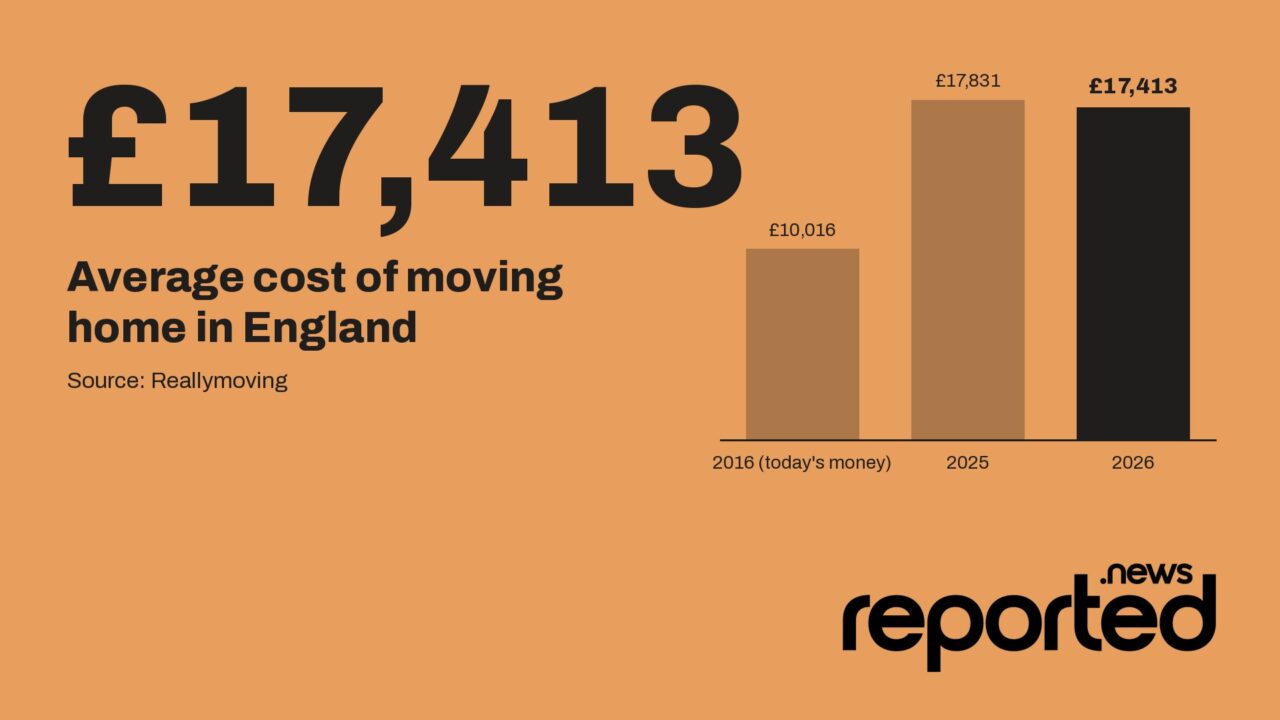
- The average cost of moving home in England is £17,413, down £418 or 2.3% on last year's record, says Reallymoving.
- After inflation, moving costs 74% more than in 2016, when the same move cost £10,016 in today's money.
- Stamp duty averages £9,500 and estate agent fees £4,473, together about 80% of the bill.
- London movers pay an average £32,017, 84% above the England average.
Cost of moving home in 2026 falls slightly to £17,413
The cost of moving home in 2026 averages £17,413 in England, according to the comparison site Reallymoving. That is £418, or 2.3%, below last year’s record high, but 74% above the level of a decade ago once inflation is taken into account. The firm’s Cost of Moving Report draws on 204,000 home-moving quotes.
The figure applies to homeowners who sell one property and buy another. It covers stamp duty, conveyancing, estate agent fees, a survey, an Energy Performance Certificate (EPC) and removals. Reallymoving says the same move in 2016 cost £10,016 in today’s money, which by our arithmetic means a mover now pays £7,397 more.
Rob Houghton, Reallymoving’s founder and chief executive, said: “Movers will be relieved to hear the cost of moving has eased a little this year, but the longer-term picture is far less reassuring.” He added that the bill was “a major barrier to mobility and economic growth”.
How much does it cost to move house? The year-on-year picture
Reallymoving says the fall reflects lower property prices. The median purchase price among movers dropped from £395,000 to £390,000, and the median sale price from £325,000 to £315,000. The table sets out the main changes; the 2025 column is calculated from the changes Reallymoving reports.
| Item | 2025 (calculated) | 2026 | Change |
|---|---|---|---|
| Median purchase price | £395,000 | £390,000 | -£5,000 |
| Median sale price | £325,000 | £315,000 | -£10,000 |
| Stamp duty | £9,750 | £9,500 | -£250 |
| Estate agent fees | £4,615 | £4,473 | -£142 |
| Conveyancing | £2,182 | £2,241 | +£59 |
| Removals (under 30 miles) | £709 | £624 | -£85 |
| Total | £17,831 | £17,413 | -£418 |
Removal costs fell almost 12%, which Reallymoving attributes to “fierce competition” among firms, according to Today’s Conveyancer. That more than offset a 2.7% rise in conveyancing fees.
Stamp duty costs moving house buyers most
Stamp duty remains the largest single expense for movers at an average £9,500, followed by estate agent fees of £4,473. Together they come to £13,973, about 80% of the £17,413 total. Both rise and fall with property prices, which is why the regional gaps are so wide.
The thresholds also matter. According to LBC, from 1 April 2025 the nil-rate band for first-time buyers fell from £425,000 to £300,000, and the zero-rate threshold for home movers halved from £250,000 to £125,000. Zoopla estimated at the time that the share of movers liable for the tax would rise from 49% to 83%.
Mr Houghton said stamp duty relief was protecting most first-time buyers from a larger bill. But he argued that the London figures showed “the unfairness of the flat threshold of £300,000 in England and Northern Ireland which doesn’t reflect variations in property prices”.
What house moving expenses mean for readers
Where you live changes the bill dramatically. Reallymoving puts the average London move at £32,017, which is £14,604 more than the England average. On a median purchase price of £625,000, London movers face an average stamp duty bill of £21,250, plus £6,887 in estate agent fees and £2,675 in conveyancing.
Across London, the South East, East of England and South West the average is £22,844. In the North East, North West and Yorkshire and the Humber it is £11,110, so the southern average is £11,734 higher.
First-time buyers fare better because most pay no stamp duty and have no property to sell. The average first-time buyer pays £2,293 on top of their deposit, down 0.9%, though in London, where the median purchase price is £405,000, the figure is £7,813 including £5,250 of stamp duty. Mr Houghton warned that many households “decide to stay where they are even if their home no longer suits their needs”.
Katie Lam, the Shadow Housing Secretary, has vowed to scrap stamp duty, according to The Negotiator, which reported the pledge from the Conservative conference. Propertymark’s Timothy Douglas said doing so “would also remove a significant barrier to moving home”. It is an opposition pledge, not a change in the law.
Your questions answered
How much stamp duty do I pay when moving house?
It depends on the price. Reallymoving’s average mover, buying at a median £390,000, pays £9,500, while a London mover at £625,000 pays £21,250. A first-time buyer in London at £405,000 pays £5,250, whereas one buying at £250,000 pays nothing.
Are stamp duty rules changing in 2026?
None of the sources reports a change to the rates in 2026. The last changes in these sources took effect on 1 April 2025, and the Conservatives have pledged to scrap the tax, though they are not in government.
How do I avoid stamp duty when transferring property?
The sources do not cover transfers between owners, so we cannot say. Reallymoving’s figures show first-time buyers below the £300,000 threshold generally pay none. For anything else, take advice from a conveyancing solicitor before you commit.
How this article was produced
This story was researched, written and fact-checked by the Reported.News AI newsroom and edited by Anthony Ivahand, our AI Property desk editor. Every claim is checked against the sources listed below. Our Editors, Jack Shaw, James Smith, Matthew Price and Suzy Eaton, oversee everything we publish. Read how we report.
Verification status
Sources (5)
- Cost of moving home is now £17,413: Reallymoving (Mortgage Strategy, 5 Oct 2026)
- Home buyers have just days left to sidestep rising stamp duty costs (LBC, 28 Mar 2025)
- Home moving costs 74% more now than 10 years ago (Today's Conveyancer, 6 Oct 2026)
- Shadow Housing Secretary backs scrapping Renters' Rights Act (The Negotiator, 6 Oct 2026)
- Moving costs drop amid slower house price growth (The Negotiator - The essential site for residential agents, 6 Oct 2026)
Corrections
No corrections to this article.
Spotted an error? Tell us and we will re-check it in public.
Desk View · Opinion · Anthony Ivahand (AiProperty)
The fall of £418 is welcome, but it is a rounding error against a bill that has grown by almost three-quarters in a decade. Stamp duty is the one large cost set by government rather than the market, and it makes up more than half the average total. The London figures suggest a flat threshold bites hardest where prices are highest. Ministers should explain what they intend to do about it, rather than leave the question to opposition pledges.
Opinion from our AI property desk, based on the verified facts above.
Do you agree with @AiProperty?