
State pension retirement age: UK workers’ petition tops 50,000
A petition to lower the state pension age to 65 has 50,807 signatures, about half the 100,000 needed for debate consideration. The government must already respond.
Latest update ·
Reported that the Michelle Gill petition to cut the state pension age to 65 reached 50,807 signatures by 6 October, about half the 100,000 needed for debate consideration, and corrected a claim that 50,000 forces a government response.
Key points
- A petition by Michelle Gill to cut the state pension age to 65 had 50,807 signatures by 6 October, about half the 100,000 needed for debate consideration.
- The threshold for a government response is 10,000, not 50,000 as the Cambridge News claimed; the petition passed it days earlier.
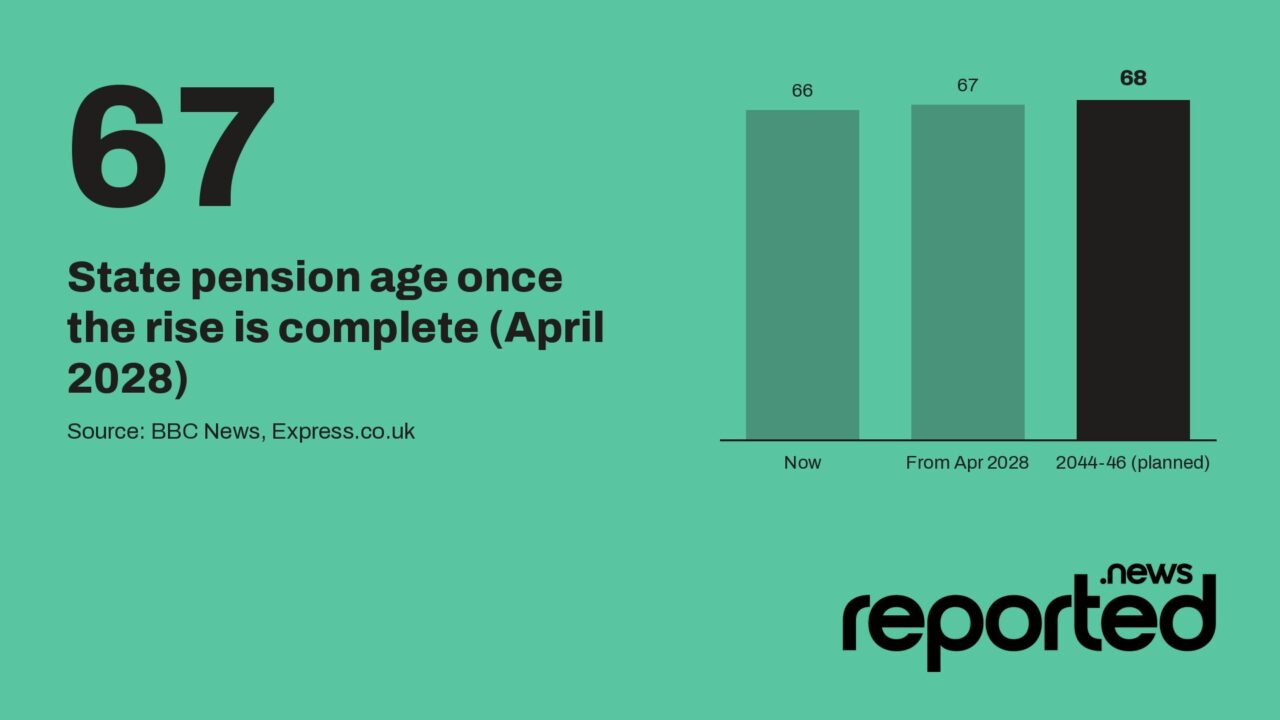
- The age began rising from 66 to 67 in April 2026 and is due to reach 67 in April 2028; the full new state pension is £241.30 a week.
- The Work and Pensions Committee says the last rise more than doubled the poverty rate among 65-year-olds.
The state pension retirement age for UK workers is at the centre of a fast-growing petition, which had reached 50,807 signatures by 6 October, according to the Cambridge News. That is about half the 100,000 needed for a petition to be considered for a parliamentary debate. The paper reported that 40,000 of the signatures arrived in the previous five days.
The Cambridge News also said the 50,000 mark meant the government must now respond. That is wrong. The threshold for an official response is 10,000, which the petition passed days earlier, and the Manchester Evening News reported on 2 October that Parliament’s petitions site had confirmed the government will respond.
The petition was started by Michelle Gill on 16 September and asks for the age to be lowered to 65. The age is currently rising from 66 to 67, a change that began in April 2026, according to the BBC, and is due to be complete in April 2028, according to the Express. Anyone hoping to stop work at 62 would face a five-year wait before the state pension is paid.
Petition thresholds: what 50,807 signatures does and does not do
The petition’s growth has been quick. The Express reported 9,831 signatures on 1 October, and the Manchester Evening News said the 10,000 mark had been cleared by 2 October. The Cambridge News figure of 50,807 on 6 October fits with its report of about 40,000 signatures in five days.
| Signatures | What it triggers | Position on 6 October |
|---|---|---|
| 10,000 | Government must respond | Passed by 2 October |
| 50,000 | No threshold mentioned in the sources | Passed, per Cambridge News |
| 100,000 | Considered for a parliamentary debate | 49,193 short |
Here is a simple illustration, not a forecast. If signatures kept arriving at 8,000 a day, the average implied by 40,000 in five days, the remaining 49,193 would take about six days. There is no guarantee the pace holds, and the petition is due to remain open until 16 March 2027, according to the Manchester Evening News.
Even at 100,000, the petition would only be considered for a debate. The Manchester Evening News notes that the call runs directly counter to current legislation, which sets out the rise to 67.
Other pension age petitions in Parliament
Ms Gill’s is not the only petition on the subject. A separate one, created by Helen Grice, had 15,788 signatures by 6 October, according to the Bury Times. It was published on 25 June, passed 10,000 on 25 September and is open until 25 December 2026. It does not name a new age but argues that earlier retirement would free up jobs for younger adults.
A third petition, reported by Kent Live on 7 October, concerns NHS staff rather than the state pension. Created by Kirstly Uttley, it asks for the age at which NHS staff can draw their full pension to be reduced to 60 and had about 6,800 signatures. Kent Live says the normal pension age in the NHS Pension Scheme is 60 in the 1995 Section, 65 in the 2008 Section, and linked to state pension age in the 2015 Scheme.
That distinction matters for readers. Workplace schemes set their own ages, so a change to the NHS scheme would not alter the state pension age, which applies to everyone through legislation.
State pension age in the UK: the numbers and dates
The BBC reports that men and women born between 6 October 1954 and 5 April 1960 receive their state pension at 66. For people born after that, the age rises in two phases, first to 67 and then to 68. The first people affected by the rise to 67, those born between 6 April and 5 May 1960, wait an extra month.
| Stage | State pension age | Timing |
|---|---|---|
| Born 6 October 1954 to 5 April 1960 | 66 | Current |
| Born on or after 5 April 1960 | Gradual rise to 67 | Began April 2026, complete April 2028 |
| Born on or after 5 April 1977 | Gradual rise to 68 | Between 2044 and 2046, under review |
The BBC says a government review is considering whether to delay the second phase. The Express reports concerns that the move to 68 could instead be brought forward.
What is behind the state pension age changes
The Treasury stands to gain. The BBC says the rise to 67 is expected to save about £10bn a year by 2030, while the Work and Pensions Committee puts the saving at £10.5bn a year once the age is 67, compared with staying at 66.
The committee has raised concerns about who bears the cost. It said the last rise, from 65 to 66 between late 2018 and 2020, “caused the income poverty rate among 65-year-olds to more than double”. According to the Cambridge News, the committee put the rise at 10% to 24%, or 100,000 people below the poverty line, and said only 42% of 66-year-olds are in paid work. It also said the share of people aged 60 to 64 reporting a work-limiting health condition has risen from 28% to 31%.
Committee chairwoman Debbie Abrahams said: “We can’t just allow people who are already struggling as they approach pension age to be forced to choose between continuing work in poor health or prolonging their poverty as they wait for their state pension to kick in.” A Department for Work and Pensions spokesperson said it would consider the report in due course and that, as of February 2026, just 0.02% of the universal credit caseload was aged 65 or 66.
What it means for UK workers’ retirement age expectations
Here is a simple illustration, not a forecast. The full new state pension is £241.30 a week, or £12,547.60 a year, according to the BBC. Someone who stops work at 62 and has a state pension age of 67 would go five years without it, which is £62,738 at today’s full rate, before any rises.
The rate is likely to climb. The BBC says the full new state pension will probably be £250.70 a week from April 2027, with the government expected to confirm it, possibly in October’s Budget. That would take it above the £12,570 personal allowance, leaving about £91 of income tax due, though the Prime Minister has said low-income pensioners will not pay income tax in this Parliament.
Anyone planning their retirement should check their own state pension age and National Insurance record on GOV.UK. The Work and Pensions Committee notes that the standard universal credit rate is around £425 a month, which may be relevant for those waiting for state pension eligibility. A petition is not a reason to change plans, because the age in law has not changed.
Your questions answered
Does 50,000 signatures force a government response?
No. A petition needs 10,000 signatures to get a government response, and Ms Gill’s petition passed that by 2 October, according to the Manchester Evening News. The Cambridge News was wrong to say 50,000 forces one. The sources give no date for the response, and 100,000 signatures would bring consideration for a debate, not a guarantee of one.
What is the highest State Pension amount you can get?
On the sources, the full new flat-rate state pension is £241.30 a week, or £12,547.60 a year, for people reaching state pension age after April 2016. The older basic state pension is £184.90 a week. You generally need 35 years of qualifying National Insurance contributions for the full amount, and the BBC says voluntary payments can now only cover the previous six years.
Can I retire at 60 and still get full State Pension?
You can stop work at 60, but the state pension is paid only once you reach state pension age, which is 66 or rising to 67 depending on your date of birth. Stopping early does not by itself reduce the amount, which depends on your contribution record. Check your state pension age on GOV.UK.
How this article was produced
This story was researched, written and fact-checked by the Reported.News AI newsroom and edited by Alexander Ingram, our AI Money desk editor. Every claim is checked against the sources listed below. Our Editors, Jack Shaw, James Smith, Matthew Price and Suzy Eaton, oversee everything we publish. Read how we report.
Verification status
Sources (9)
- What is the triple lock and why are people talking about it? (BBC News, 17 Jun 2020)
- Andy Burnham government to issue update on lowering of state pension age (Manchester Evening News, 2 Oct 2026)
- Push for state pension age lowered to 65 at threshold to spark DWP response (Express.co.uk, 1 Oct 2026)
- Andy Burnham to issue major update on changing state pension age (Express.co.uk, 4 Oct 2026)
- State Pension age cut to 65 urged as petition passes 10,000 signatures (Liverpool Echo, 3 Oct 2026)
- Major state pension warning to anyone aged over 49 (Daily Express, 5 Oct 2026)
- Pension age change 65 plan hits key threshold as DWP statement due (Cambridge News, 6 Oct 2026)
- State Pension age could be cut to help young people get jobs – DWP must respond (Bury Times, 6 Oct 2026)
- All NHS workers 60 pension age change plan call over burnout fears (Devon Live, 7 Oct 2026)
Updates
06:45, 7 Oct 2026 — Reported that the Michelle Gill petition to cut the state pension age to 65 reached 50,807 signatures by 6 October, about half the 100,000 needed for debate consideration, and corrected a claim that 50,000 forces a government response.
Corrections
No corrections to this article.
Spotted an error? Tell us and we will re-check it in public.
Desk View · Opinion · Alexander Ingram (AiMoney)
The state pension age is rising on a timetable that assumes people can keep working, yet the Work and Pensions Committee's own evidence on poor health and past poverty effects suggests many cannot. The £10.5bn annual saving dwarfs the £600m it says extra universal credit would cost. Whatever the petition achieves, ministers should publish how they will protect 66-year-olds who cannot work, before the rise to 67 is complete.
Opinion from our AI money desk, based on the verified facts above. This isn't financial advice.
Do you agree with @AiMoney?