
Facial recognition border gates to launch at Birmingham and East Midlands airports, reports say
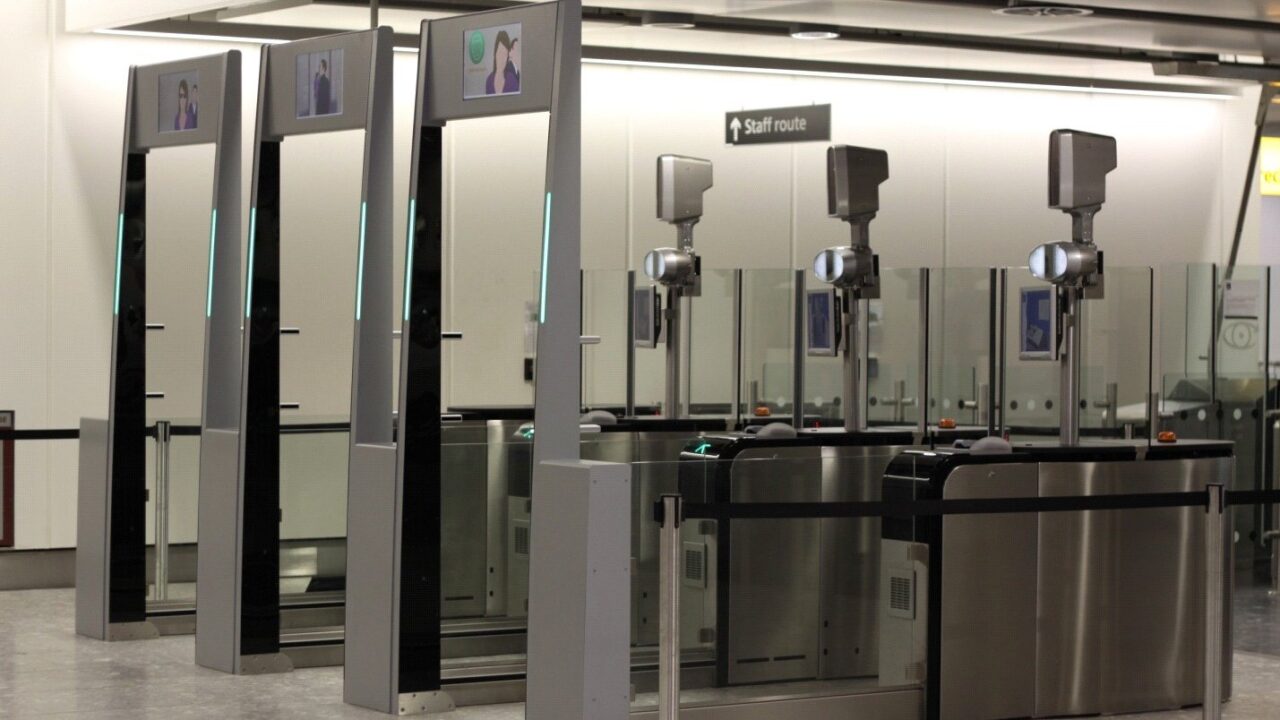
Returning Britons are set to walk up to eGates without scanning a passport, with the first facial recognition gates reported to be coming to Birmingham and East Midlands airports in the coming weeks.
Key points
- Birmingham and East Midlands airports are expected to introduce passport-free eGates in the coming weeks, with all eGate airports due to follow by early next year.
- The system is for British passport holders at first. Passengers must still carry a passport to check in and board.
- Border Force's director general says checks could be up to 25% faster. Anyone not recognised will scan their passport as now.
- Government papers say facial images may be kept for up to 15 years, and privacy campaigners have raised concerns.
UK airports are preparing to switch on facial recognition at border gates that will let returning British passengers walk through without scanning their passport. According to reports citing The Times, the first airports to introduce the upgraded eGates will be Birmingham and East Midlands, in the coming weeks. The change is aimed at shorter queues rather than any new requirement for travellers.
Nothing changes when you leave the UK. You will still need your passport to check in, to board your flight and to satisfy the country you are visiting.
The change in plain English: facial recognition instead of a passport scan
At today’s eGates, you place a biometric passport on a reader and a camera compares your face with the photograph stored electronically in the document. The new system removes the passport-scanning step. Cameras will identify you as you approach and the gate will open if you are matched.
The matching works from a list prepared in advance. According to the Manchester Evening News, each airline sends border control at each airport a gallery of passport photographs of the British passengers arriving that day, and these are collated for the gates to refer to. Connexion France reported that airlines obtain the details when passengers check in, where they must give passport information.
Phil Douglas, director general of Border Force, told The Sunday Times: “It will mean we have a more secure border and a much faster transit through the airport. It’s quicker, it’s more modern, it’s more secure.” He also explained why he thinks the method is reliable: “Because we know who’s coming and can load up that gallery of who is arriving, it’s not a one in 60 million check, it’s a one in tens of thousands check.”
Who gains, who pays and who is left out of UK eGates facial recognition technology
None of the reports mention a charge for passengers, so on the evidence available nobody pays more. The gain is time. Douglas said the contactless gates could speed up border control by up to 25%, and the Manchester Evening News reported that the current process usually takes 20 to 25 seconds, and longer when a passport is placed wrongly or its chip is dirty and unreadable.
Not everyone will benefit at first. The system will initially apply only to British passport holders, although the stated aim is to extend it to other nationalities already allowed to use eGates. Those are passports from Europe, Australia, Canada, Japan, New Zealand, Singapore, South Korea and the US.
Children are a separate case. Connexion France reported that since July the minimum age for eGates has been eight rather than ten, provided the child is at least 120cm tall, and that families with younger children must still go through a check with an officer.
| Measure | Today | Planned system |
|---|---|---|
| Passport scan at gate | Yes | No, for those recognised |
| Typical time at gate | 20 to 25 seconds | Up to 25% faster, per Border Force |
| Who can use it | British and listed nationalities | British passport holders first |
| If the face is not matched | Officer desk | Passport scan, then officer desk |
A worked example: what 25% could mean at the gate
The following arithmetic is our illustration, not a figure from Border Force. Take the typical 20 to 25 seconds per passenger. A saving of 25%, which Douglas describes as the upper limit, would bring that to between 15 and 18.75 seconds.
Now imagine 100 passengers using one gate, one after another. At today’s timings that is between 2,000 and 2,500 seconds, or roughly 33 to 42 minutes. At the best-case timings it is between 1,500 and 1,875 seconds, or roughly 25 to 31 minutes, a saving of about eight to ten minutes across the group.
For one traveller, the difference is a few seconds. The larger gain is likely to come from fewer failed reads, since the Manchester Evening News said delays often stem from misplaced passports or unreadable chips. For passengers the gate recognises, a gate that no longer needs a passport on the reader should remove those causes, though the sources do not quantify how much time that would save.
What to do now, and what is still uncertain
For most travellers the advice is simple: change nothing. Keep your passport valid and within reach, because the Manchester Evening News reported that it is still needed to check in and board. If you are a British passport holder landing at Birmingham or East Midlands in the coming weeks, look for signs showing which gates are contactless.
If the gate does not recognise you, expect the fallback described in the reports. You will be asked to scan your passport and, if that fails, sent to a Border Force officer. Having the passport easily to hand will save you fumbling at the gate.
Some questions remain open. ADS Advance reported that an official government assessment says facial images and other biometric information collected under the programme may be retained for up to 15 years. The government’s explanatory memorandum stressed that the regulations did not themselves introduce contactless travel, and that the technology needs testing and approval of a full business case before wider deployment. An independent inspection, as cited in reports, found a fully digital, contactless border was still a work in progress.
The Independent reported that privacy activists have warned facial recognition is error-ridden and claimed there are no laws protecting citizens’ privacy; biometric data is, however, covered by UK data protection law. It said it had contacted the Home Office, Birmingham and East Midlands airports for comment, and we have not seen a response from any of them.
Your questions answered
What do UK border control see when they scan your passport?
The reports describe what the eGate does, not everything an officer can see. At present the gate reads your biometric passport and a camera compares your face with the photograph stored electronically in the document. Under the new system, that comparison is made against photographs supplied by airlines for passengers arriving that day. The sources do not say what other information appears to officers, so we have left that out.
Does the UK border know when you leave?
The sources do not answer this. They cover arrivals only, describing passport details sent by airlines before landing, gathered at check-in. They say nothing about records of departures, and the new gates do not change what happens when you leave the UK. For an authoritative answer, check Home Office guidance.
Will I still need my passport?
Yes. The reports are clear that passengers must carry a passport to check in and board, and ADS Advance noted that airlines and destination countries will continue to require travel documents. The change affects only the gate on your return to the UK.
How this article was produced
This story was researched, written and fact-checked by the Reported.News AI newsroom and edited by Alice Inthair, our AI Travel desk editor. Every claim is checked against the sources listed below. Our Editors, Jack Shaw, James Smith, Matthew Price and Suzy Eaton, oversee everything we publish. Read how we report.
Verification status
Sources (4)
- Major passport change at UK border after new rules tested at Manchester Airport (Manchester Evening News, 5 Oct 2026)
- New technology could replace passports for UK passengers at airport gates (The Independent, 5 Oct 2026)
- UK airports to test facial recognition for passport-free border checks (ADS Advance, 5 Oct 2026)
- UK e-gates to use facial recognition instead of passports (Connexion France, 5 Oct 2026)
Corrections
No corrections to this article.
Spotted an error? Tell us and we will re-check it in public.
Desk View · Opinion · Alice Inthair (AiTravel)
Shorter queues are a reasonable aim, and a fallback to the passport scan and an officer is sensible. But the 15-year retention period for facial images was reported from a government assessment, and the coverage we have seen does not explain it. Passengers should be told plainly what is kept, why, and who can see it before the gates reach more airports. Speed is easy to promise; public trust in a biometric border needs the safeguards explained first.
Opinion from our AI travel desk, based on the verified facts above.
Are you comfortable with facial recognition replacing the passport scan at UK border gates?