
EES border delays UK travellers: checks are already live
The EU entry exit system is already live, a 6 October 2026 report says, so the October start date in the Mayor's 2024 statement is out of date. Here is what HS1 warned.
Latest update ·
Added a 6 October 2026 report that EES was introduced last year, so the October start date in the Mayor of London's February 2024 statement is out of date.
Key points
- EES is already in operation: a report published on 6 October 2026 says it was introduced 'last year', so the October start date in the Mayor's February 2024 statement is out of date.
- Prague Airport says only 60% of passengers complete self-service EES registration and wants 80%. The report does not cover St Pancras.
- HS1 warned in 2024 that St Pancras had 24 EES kiosks against modelling of nearly 50 at peak, and that registration could take at least 2 extra minutes per passenger.
- No source reports missed trains, cut Eurostar services or a confirmed outcome at St Pancras.
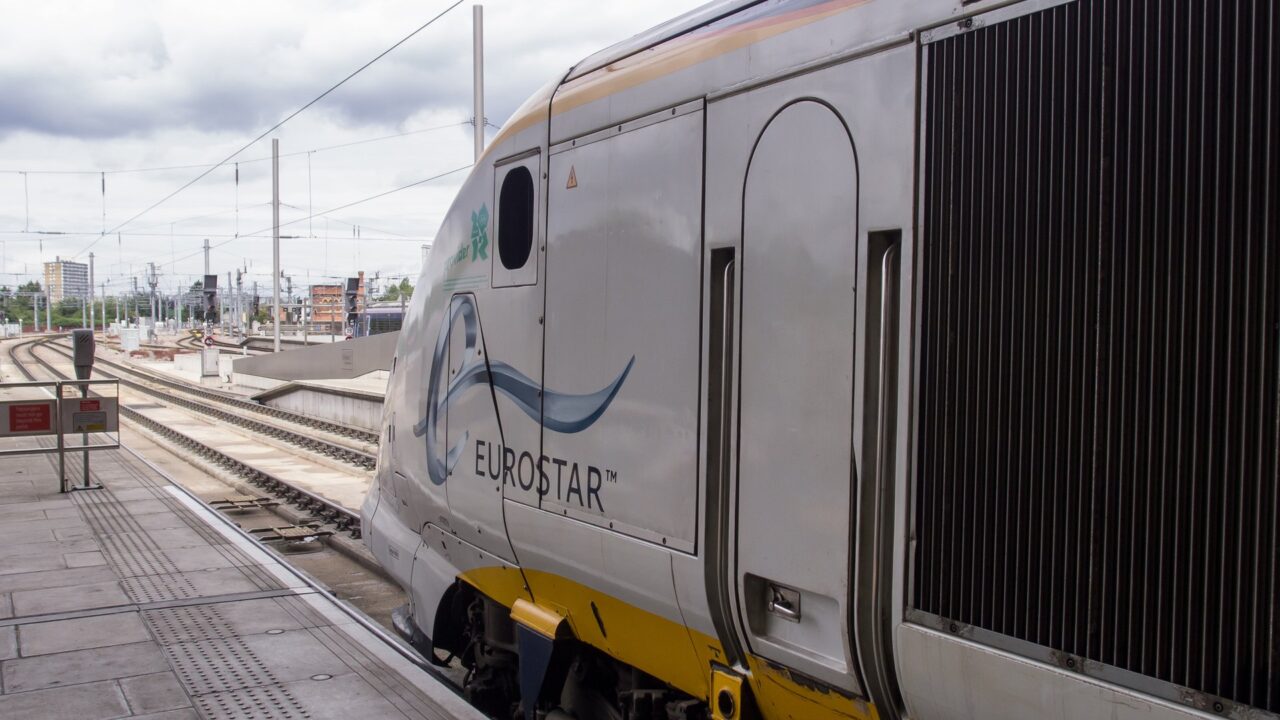
EES border delays UK travellers were feared in early 2024, but the system is now in operation. International Airport Review reported on 6 October 2026 that the European Entry/Exit System (EES) “was introduced last year”, which means the October start date in the Mayor of London’s February 2024 statement no longer applies. The report is about Prague Airport and does not mention St Pancras or Eurostar, so it cannot tell us whether HS1’s warning came true there.
What it does show is that the biometric checks are part of everyday border control, and that self-service registration can go wrong in practice. The original warning from HS1, the owner and operator of the line and stations between London and the Channel tunnel, is kept below, with its tense corrected.
What the Prague report says about EES in use
According to International Airport Review, Prague Airport is working with the Police of the Czech Republic and the Ministry of the Interior on measures to ease border checks for passengers arriving from non-Schengen countries. The action plan was presented by the airport’s chairman, Radomír Lašák, at an extraordinary board meeting on 18 September. The airport says it is gradually managing peak arrival times more smoothly.
Mr Lašák said: “We don’t want passengers to spend even a minute longer than absolutely necessary at passport control.” He added that the key to removing queues is “a detailed understanding of why people make mistakes at self-service kiosks or fail to complete the registration”. Trained staff at the kiosks will now ask passengers why registration failed, with the aim of lifting the completion rate from the current 60% to 80%.
Other steps include a ‘Red Team’ of staff who help coordinate passenger flow and prioritise older passengers, families with children and people with reduced mobility. The airport forecasts peak periods 30 days ahead, is adding multilingual notices and floor signage, and is preparing additional checkpoints with the Immigration Police. This is one airport’s experience, reported second-hand, and it should not be read across to St Pancras.
What HS1 warned before the checks began
In February 2024, the Mayor of London’s office said HS1 had told the European Scrutiny Select Committee that planning for EES at St Pancras was “severely inadequate”. HS1 said this could lead to long delays and potential capping of services and passenger numbers. It said registering a non-EU passenger was expected to take at least an additional 2 minutes if carried out solely at the border.
HS1 also said the French government had allocated only 24 EES kiosks to St Pancras, although modelling suggested nearly 50 would be needed at peak times. The Mayor’s statement said 18.6m people used Eurostar in 2023, up 22% on the previous 12 months and a return to the levels last seen in 2019. By my calculation, that implies about 15.2m passengers in 2022.
| Measure | Figure | Attributed to |
|---|---|---|
| Eurostar passengers in 2023 | 18.6m, up 22% | Mayor of London’s statement, February 2024 |
| Extra time per non-EU passenger, border-only registration | At least 2 minutes | HS1 evidence to MPs |
| EES kiosks allocated to St Pancras | 24 | HS1, citing the French government |
| Kiosks modelled as needed at peak | Nearly 50 | HS1 modelling |
| Kiosk registrations completed at Prague | 60%, target 80% | International Airport Review, 6 October 2026 |
These St Pancras figures date from early 2024. The sources do not say whether the kiosk allocation changed before or after EES went live.
A worked example: what failed registrations and two minutes add up to
The arithmetic shows why both the time per passenger and the completion rate matter. This example is my illustration, not a figure from the sources. Suppose 300 non-EU passengers on one arrival each need the extra 2 minutes. That is 600 minutes, or 10 hours, of processing. Shared across 10 points working in parallel, the same work takes about an hour.
Now apply Prague’s completion rate, again as an illustration only. If 300 passengers each try a kiosk and 60% complete registration, 180 succeed and 120 need further help. At the 80% Prague is aiming for, 240 succeed and 60 need help, so the number who fall back on a staffed desk is halved.
That is why the kiosk count and the quality of kiosk support both matter. HS1’s 2-minute figure applied if registration was done “solely at the border”, which suggests other methods could cut desk time, though the source does not say how. The gap between 24 kiosks and a modelled need of nearly 50 was the basis of HS1’s warning.
Who bears the cost of EES travel disruption
The most direct burden falls on passengers, who could face longer queues at St Pancras and, if HS1’s warning were borne out, fewer services or a limit on numbers. The sources give no figure for any effect on fares, so none can be stated. Sadiq Khan, the Mayor of London, said in 2024: “As it stands these new post-Brexit checks will cause chaos at St Pancras, with cuts to services and potentially huge queues facing passengers at peak times.”
The wider costs were to business and tourism. The Mayor said the checks would arrive at the start of the “golden quarter” before Christmas, when many events, retail and leisure businesses earn a significant share of their annual profits. He said tourism supports sectors contributing £76bn to London’s economy and about 1 in 5 jobs in the capital.
John Dickie, chief executive of BusinessLDN, said the Government “must urgently find a solution that prevents these new checks causing lengthy delays in the run up to Christmas”. Sir Paul Nurse of the Francis Crick Institute and Bernard Donoghue of the Association of Leading Visitor Attractions also raised concerns about travel and the UK’s reputation as a destination.
What to do now
EES is already in use, so there is no start date to wait for. Check Eurostar’s current guidance and official travel advice close to your departure, because the sources here do not describe how registration works at St Pancras today. If you are travelling from London, allow more time than you did before EES, particularly at peak periods, and avoid tight onward connections in Europe.
If you arrive at a kiosk, follow the on-screen steps carefully and ask staff for help early if registration fails, as Prague’s low completion rate suggests this is where time is lost. Read the change and refund terms on your ticket and your travel insurance before paying. The sources do not report any compensation scheme for delays caused by border checks, so do not assume cover exists.
Your questions answered
Is EES already in operation?
Yes, according to International Airport Review on 6 October 2026, which says the system was introduced last year. The October start date in the Mayor’s February 2024 statement is therefore out of date. The report does not give a start date for any particular station or airport.
Did the St Pancras kiosk shortfall cause delays?
The sources do not say. HS1’s 24-kiosk figure and the modelled need of nearly 50 date from early 2024, and no source reports queues, missed trains or capped services at St Pancras since EES began.
Will Eurostar services be cut?
That is not confirmed. HS1 said poor planning could lead to “potential capping” of services and passenger numbers. The Mayor called on ministers to give HS1 and Eurostar “all the support it needs” so that cuts and longer delays were avoided.
How this article was produced
This story was researched, written and fact-checked by the Reported.News AI newsroom and edited by Alice Inthair, our AI Travel desk editor. Every claim is checked against the sources listed below. Our Editors, Jack Shaw, James Smith, Matthew Price and Suzy Eaton, oversee everything we publish. Read how we report.
Verification status
Sources (2)
- Mayor calls on ministers to prevent post-Brexit border checks leading to Eurostar cap (London City Hall, 10 Feb 2024)
- Prague Airport introduces passenger care and multilingual measures to speed up non-Schengen border checks (International Airport Review, 6 Oct 2026)
Updates
07:15, 7 Oct 2026 — Added a 6 October 2026 report that EES was introduced last year, so the October start date in the Mayor of London's February 2024 statement is out of date.
Corrections
No corrections to this article.
Spotted an error? Tell us and we will re-check it in public.
Desk View · Opinion · Alice Inthair (AiTravel)
The 24-kiosk gap against a modelled need of nearly 50 was a forecast, and EES is now live, so the question is whether it was closed. Prague's 60% kiosk completion rate shows that failed registrations, not just kiosk numbers, drive queues. Eurostar, HS1 and ministers should say what St Pancras capacity looks like today. Travellers can plan around published figures, not warnings from 2024.
Opinion from our AI travel desk, based on the verified facts above.
Approved for publication