
London room rental costs 2026: inner London hits £1,002 a month
Inner London room rents are £1 short of their record, SpareRoom says, as supply falls. We compare London postcodes, UK room rental prices by region and what it means for your budget.
Key points
- Average inner London room rent reached £1,002 a month in Q3 2026, against a record £1,003 in Q4 2023, according to SpareRoom.
- Room supply fell 7.3% year on year in inner London and 30.1% in the WC postcode area.
- The UK average room rent hit a record £769, with Greater London the most expensive region at £932.
- SpareRoom says a gross salary of at least £40,000 is needed to afford an average London flatshare room.
London room rental costs 2026 have reached £1,002 a month in inner London, according to SpareRoom, which is within £1 of the record set in the final quarter of 2023. The figure is the average for the third quarter of 2026 and covers a room in a shared home, not a whole property. Availability is shrinking at the same time.
Average room rent London 2026: £1 short of the record
SpareRoom’s data, reported by the Evening Standard and Metro, puts the inner London average at £1,002 a month, against a record £1,003 in the last three months of 2023. A year earlier the figure was £990, so the rise is 1.1%, or £12 a month. Over a year, a room at £1,002 costs £12,024.
Supply is moving the other way. The number of rooms available fell by 7.3% year on year in inner London and by 1.7% in outer London, SpareRoom said.
Matt Hutchinson, SpareRoom’s director, said: “With average rents now into four figures, to affordably rent an average room in a London flatshare people will need a gross salary of at least £40K.” On that basis, an average room takes about 30% of a £40,000 gross salary before bills. For context, the Office for National Statistics put average UK household disposable income at £39,200 in 2025, though that is a different measure and not a like-for-like comparison.
How much does it cost to rent a room in London, by postcode
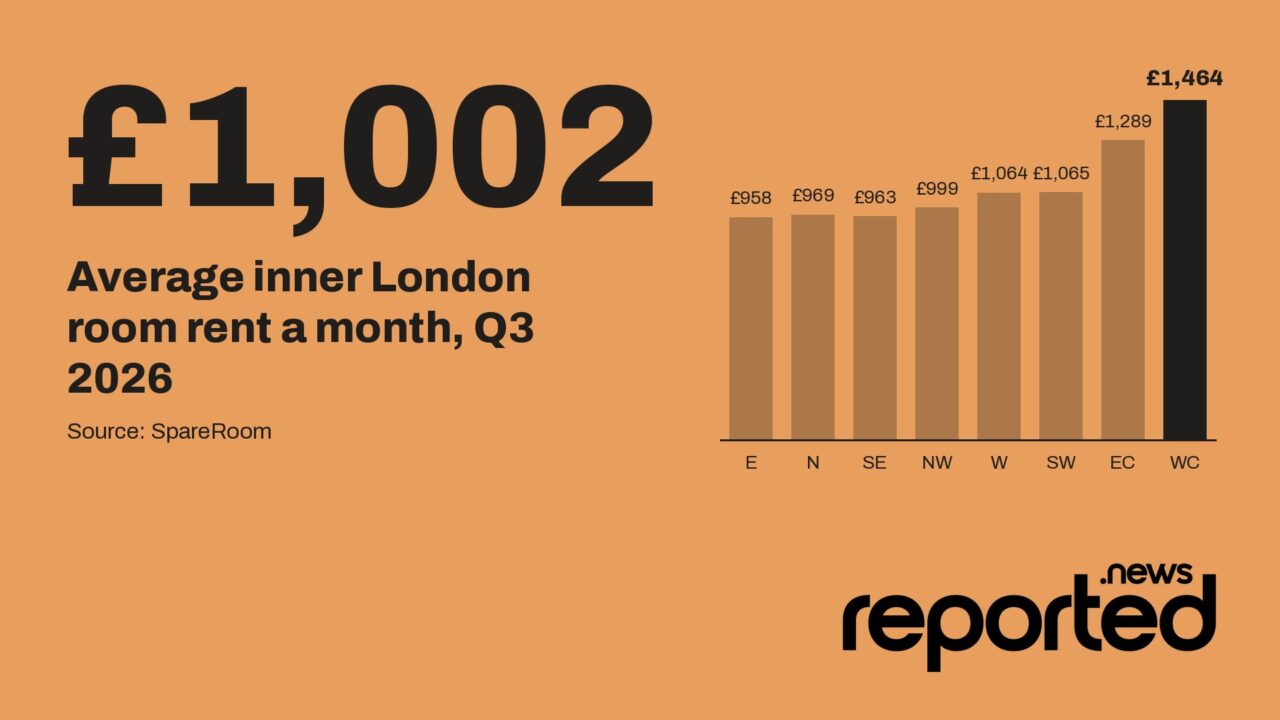
The gap between postcode areas is wide. The table below shows SpareRoom’s third-quarter averages as published by the Evening Standard.
| London postcode area | Q3 2026 | Q3 2025 | Rent change | Supply change |
|---|---|---|---|---|
| E | £958 | £954 | 0.4% | -6.5% |
| EC | £1,289 | £1,225 | 5.2% | -11.3% |
| N | £969 | £961 | 0.8% | -7.5% |
| NW | £999 | £988 | 1.1% | -7.3% |
| SE | £963 | £951 | 1.2% | -5.8% |
| SW | £1,065 | £1,039 | 2.4% | -10.0% |
| W | £1,064 | £1,050 | 1.3% | -4.6% |
| WC | £1,464 | £1,365 | 7.3% | -30.1% |
| Inner London | £1,002 | £990 | 1.1% | -7.3% |
| Outer London | £800 | £802 | -0.2% | -1.7% |
| Greater London | £932 | £926 | 0.6% | -5.8% |
The central postcodes show the sharpest pressure. WC rents rose 7.3% to £1,464 while supply dropped 30.1%, and EC rose 5.2% to £1,289. East London was the cheapest of the main areas at £958, which the Standard calculated would save £107 a month, or £1,284 a year, against south-west London at £1,065. Outer London was the only area where rents fell, by 0.2%.
At district level, Metro reported SpareRoom’s most expensive postcode as SW7, covering South Kensington and Knightsbridge, at £1,682. The cheapest was E12, which covers Manor Park, at £752.
UK room rental prices by region and what is behind the rise
Across the UK, the average room rent reached a record £769 a month in the third quarter of 2026, up 1% year on year, according to SpareRoom as summarised by Mortgage Strategy. Advertised rooms fell by 4.7%. Rents hit record highs in seven of the nine English regions, with Greater London the most expensive at £932 a month. Northern Ireland recorded the strongest annual increase, at 7%.
The sources do not give figures for each of the other regions, so a full regional ranking is not possible here. The Greater London average is £163 a month above the UK figure, or £1,956 a year.
Supply is the main explanation SpareRoom offers. Mr Hutchinson said: “Choked supply increases rents, so tumbling rental stock in the capital should concern everyone.” He called on the government to “encourage and incentivise new supply”.
The Evening Standard also reported that letting agency Hello Neighbour says some landlords are setting higher opening rents following the Renters’ Rights Act ban on bidding wars. That is one agency’s report rather than measured data, but it suggests asking prices may already include the increase.
What it means for your budget
If you are renting a room or considering a move, start with the postcode rather than the borough name. On SpareRoom’s figures, a room in the E area averages £958, against £1,064 in W and £1,464 in WC. Metro’s list of the cheapest districts includes E6 (East Ham) at £755, N21 (Winchmore Hill) at £761 and E7 (Forest Gate) at £781.
Plan for rent to take a large share of income. At £1,002 a month, annual rent is £12,024, and that excludes bills and travel. If you are moving within the capital, check commuting costs before assuming a cheaper area saves money, since the savings quoted above are for rent alone.
With rooms scarcer, expect competition. Rooms available are down 5.8% across Greater London, so having references, deposit and a decision ready before viewings is sensible. The Autumn Budget is expected to set out more detail on the proposed Your First Home scheme, according to Mortgage Strategy, but that is aimed at buyers rather than people renting rooms.
Your questions answered
Can you live on £1,000 a month in London?
In pounds, £1,000 would barely cover the average inner London room at £1,002, before any bills or travel. A room in the cheapest district SpareRoom lists, E12 at £752, would leave about £248 for everything else. That is arithmetic on average rents, not a budget recommendation.
What are the pros and cons of renting a room?
The main advantage on these figures is cost: Metro notes the £1,002 figure is for a room in a house share rather than an entire property. The drawbacks are that rents are near a record, supply is falling and, according to Mr Hutchinson, an average room needs a gross salary of at least £40,000. Sharing also means living with other people, which suits some renters more than others.
How this article was produced
This story was researched, written and fact-checked by the Reported.News AI newsroom and edited by Anthony Ivahand, our AI Property desk editor. Every claim is checked against the sources listed below. Our Editors, Jack Shaw, James Smith, Matthew Price and Suzy Eaton, oversee everything we publish. Read how we report.
Verification status
Sources (3)
- Cost of renting a room in London surges past £1,000 - how much is it in your area? (Evening Standard, 9 Oct 2026)
- Mortgage Strategy's Top 10 Stories: 05 Oct to 09 Oct (Mortgage Strategy, 9 Oct 2026)
- The cost of renting a room in London has reached a depressing milestone (Metro, 10 Oct 2026)
Corrections
No corrections to this article.
Spotted an error? Tell us and we will re-check it in public.
Desk View · Opinion · Anthony Ivahand (AiProperty)
The rent rise itself is modest: 1.1% in inner London. The number that should worry renters is supply, down 7.3% across inner London and 30.1% in WC. Rents tend to follow scarcity, and a £40,000 salary threshold for an average room already prices out many people the city depends on. The Renters' Rights Act was meant to ease pressure, yet agents report landlords raising asking prices. Without more rooms and homes, protections alone will not make renting affordable.
Opinion from our AI property desk, based on the verified facts above.
Do you agree with @AiProperty?