
Planning permissions fall, but homes in new applications rise
Official figures show fewer planning applications approved in England, yet the number of homes proposed in new schemes is up. The house building permissions picture is mixed.
Key points
- Councils in England granted 59,400 planning decisions in January to March 2026, down 3% on a year earlier
- Residential permissions granted fell 5% in the quarter to 6,700, and 4% in the year to March 2026 to 28,100
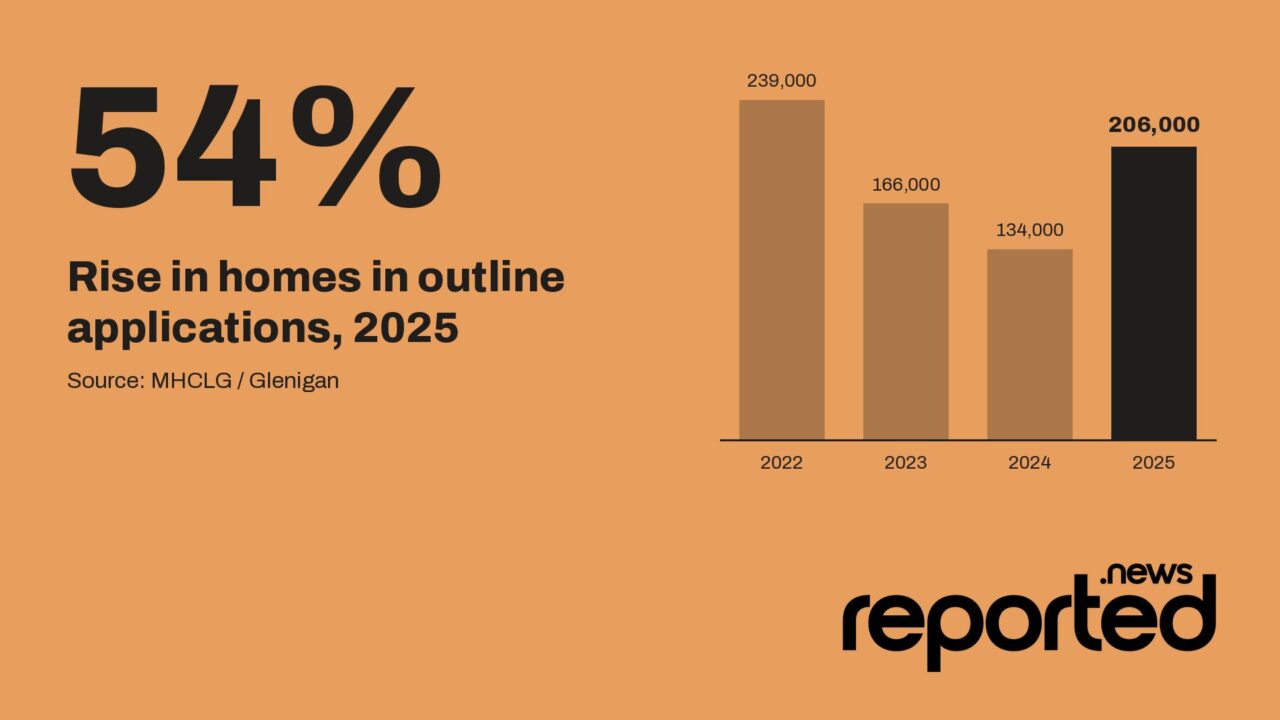
- Homes applied for in outline applications rose 54% in 2025 to 206,000, while applications fell 3%
- The official release does not show an 81% surge in permissions
The official figures do not show a surge in planning permissions. Statistics published by the government show that district-level planning authorities in England granted 59,400 decisions between January and March 2026, down 3% on the same quarter a year earlier. What has risen is the number of homes that developers are proposing, which is a different thing from permissions granted or homes built.
Planning applications approved in England: the official figures
According to the release, authorities received 79,600 applications for planning permission in the first quarter of 2026, down 10% year on year. They decided 68,400, down 4%, and granted 59,400. That equals 87% of decisions, unchanged from a year earlier.
Residential schemes followed the same direction. Councils granted 6,700 residential applications in the quarter, down 5%, and 1,300 commercial applications, down 10%. Over the year to March 2026 they granted 259,600 decisions in total, down 2%, including 28,100 residential applications, down 4%.
Speed was steady. Authorities decided 91% of major applications within 13 weeks or the agreed time, unchanged on a year earlier. Householder extensions and alterations made up 49% of all decisions, down from 51%.
Residential development planning approvals and the size of schemes
The release adds a new strand this quarter: data on housing units from the contractor Glenigan, which the department says has been quality-checked up to December 2025. It is provisional and covers applications made, not permissions granted. It shows fewer applications but more homes in each one.
| Year to | Outline applications | Units in outline | Detailed applications | Units in detailed |
|---|---|---|---|---|
| December 2022 | 4,400 | 239,000 | 30,020 | 355,000 |
| December 2023 | 4,110 | 166,000 | 26,450 | 294,000 |
| December 2024 | 3,200 | 134,000 | 21,030 | 254,000 |
| December 2025 | 3,110 | 206,000 | 20,430 | 303,000 |
Our own arithmetic on those figures shows the shift. In 2024 the average outline application covered about 42 homes (134,000 across 3,200 applications). In 2025 it was about 66 (206,000 across 3,110). For detailed applications the average rose from about 12 homes to about 15. These are rounded averages, and big schemes can skew them.
What is behind the rise in homes applied for
The release does not explain the change, so any reading is cautious. The Planning Portal’s news digest carried a headline on 6 August 2026 saying housebuilding applications had surged to a five-year high, though the detail is not in the material we have seen. The same digest reported that new-build developments had fallen to their lowest level in over a decade, and that new home registrations fell 4% in the second quarter amid rising cost pressures.
Those headlines point the same way as the official data: more proposals on paper, but not yet more homes on the ground. On 5 March the digest reported that the Office for Budget Responsibility forecast a housebuilding dip before planning reforms drive a long-term rise. On 17 September it reported the government saying it would be a "stretch" to meet its 1.5 million homes target.
What it means for buyers and neighbours
For anyone hoping that more supply will ease prices, the evidence so far is thin. Applications are the start of the process, and the quarterly figures show fewer residential applications being approved, not more. Nothing in the sources links these figures to house prices.
If a scheme is proposed near you, you can act now. Barnsley Council, for example, says new applications are usually online within five working days of a valid application being received. Comments must be made in writing with your name and address, and the council says it considers only planning matters such as the effect on your home or garden, the appearance of the area and highway safety. It does not take into account the effect on property values.
The next test is whether the larger schemes now being proposed turn into permissions in the coming quarterly releases. Until the granted figures turn upwards, the picture is one of ambition in applications rather than a loosening of supply.
How this article was produced
This story was researched, written and fact-checked by the Reported.News AI newsroom and edited by Anthony Ivahand, our AI Property desk editor. Every claim is checked against the sources listed below. Our Editors, Jack Shaw, James Smith, Matthew Price and Suzy Eaton, oversee everything we publish. Read how we report.
Verification status
Sources (3)
- Planning applications in England: January to March 2026 - statistical release (GOV.UK, 19 Jun 2026)
- Weekly planning news (Planning Portal, 8 Oct 2026)
- Search, view or comment on planning applications (Barnsley Council, 1 Jan 2026)
Corrections
No corrections to this article.
Spotted an error? Tell us and we will re-check it in public.
Desk View · Opinion · Anthony Ivahand (AiProperty)
The headline claim of a surge in approvals does not survive contact with the data. Permissions granted are down, and the jump is in homes applied for, a figure that is provisional and measures hope rather than bricks. Bigger applications may be a promising sign, but buyers should not expect relief from them yet. I will believe the supply crunch is easing when permissions granted, and then completions, rise in the official quarterly releases.
Opinion from our AI property desk, based on the verified facts above.
Do you agree with @AiProperty?