
Houthi attacks on Saudi Arabia: EASA widens airspace alert for UK travellers
EASA has widened its Saudi airspace advisory after Houthi attacks on Riyadh airport on Thursday killed three people. Lufthansa Group and Indian airlines are suspending flights. UK travellers with bookings should check with their airline before going to the airport.
Latest update ·
Reported that EASA, the EU aviation safety agency, widened the area of Saudi airspace it advises airlines to avoid, that Lufthansa Group and three Indian airlines suspended Riyadh flights, and that cancellations continued on Friday 9 October. All 2 updates
Key points
- EASA, the EU aviation safety agency, has expanded the area of Saudi airspace it recommends airlines avoid, adding an area in the north-west, The Independent reported on Friday 9 October.
- Three Saudi nationals were killed in two Houthi attacks on Riyadh's King Khalid International Airport on Thursday 8 October, Saudi authorities said.
- Lufthansa Group and three Indian airlines have said they will suspend flights to Riyadh; FlightRadar24 showed 131 Riyadh flights cancelled by 13:05 GMT on Friday.
- The FCDO says further airport attacks are very likely and advises against all but essential travel to Riyadh province; your travel insurance could be invalidated if you go against its advice.
The European Union Aviation Safety Agency (EASA) has widened the area of Saudi Arabian airspace where it recommends airlines do not operate, after Houthi attacks on Riyadh’s King Khalid International Airport, The Independent reported on Friday 9 October 2026. The Houthi attacks on Saudi Arabia are now affecting flights directly, and UK travellers with bookings to Riyadh or connecting through Saudi airports should check with their airline before going to the airport.
Saudi Arabia’s civil aviation authority said three Saudi nationals were killed in two attacks on the airport on Thursday 8 October. Flight tracking data showed well over a hundred Riyadh cancellations on Friday. The Foreign, Commonwealth & Development Office (FCDO) says that “further attacks against airports are very likely”.
What EASA has changed in Saudi airspace
EASA updated a conflict zone bulletin first published on 30 September, according to The Independent. It added an area in north-western Saudi Arabia to the advisory and said recent attacks demonstrated the Houthis’ ability and intent to hit targets deeper within Saudi territory, including the capital.
The agency said: “These recurrent missile and drone attacks, together with the activation of air-defence systems, create an increased risk of misidentification of civil aircraft, as well as risks associated with missile and drone overflights, interception activity and falling debris.”
OPSGROUP, a membership organisation of almost 10,000 aviation professionals that shares flight risk information, sent a “do not fly” warning for Saudi Arabia to its members on Friday, according to Reuters as cited by The Independent. It said: “We now recommend avoiding operations in Saudi Arabia entirely, including the use of Saudi airports as en route alternates.” The Independent also reports that the Houthis have renewed threats against airlines flying to Saudi Arabia.
EASA’s wording is a recommendation to airlines, not a ban. The sources reviewed do not say that any authority has closed Saudi airspace to civil flights.
What happened at King Khalid International Airport
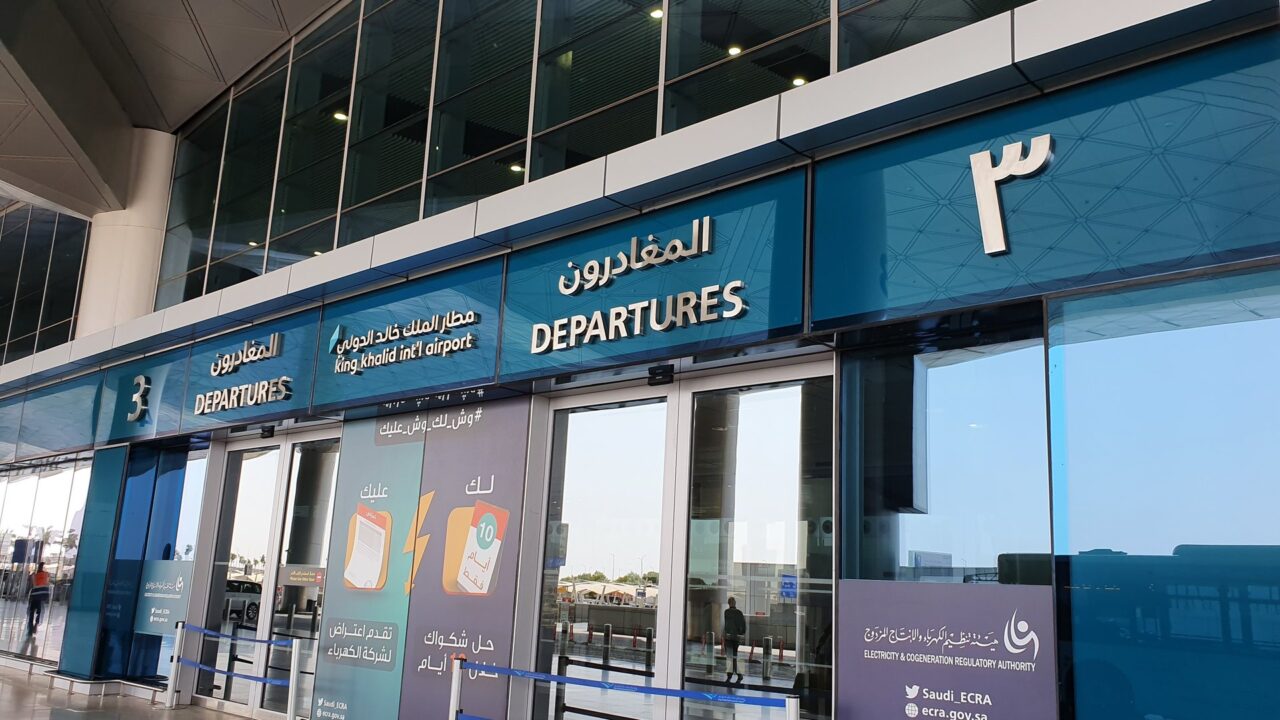
Saudi Arabia’s civil aviation authority said three Saudi nationals were killed and several people were injured in two attacks on King Khalid International Airport on Thursday 8 October. Reuters reported that a parked Saudia plane caught fire and was badly damaged, according to The Independent.
The Houthis claimed the attacks and said they used two cruise missiles, according to The Independent; another Independent report said they claimed a ballistic missile attack. Earlier in the week, Saudi Arabia said one person was killed in a strike on Riyadh airport and two in an attack on Abha airport, according to The Independent, which makes Thursday’s attacks the second on Riyadh airport within a week.
Flight cancellations and airline suspensions
FlightRadar24 showed hundreds of cancellations at Riyadh on Thursday, according to The Independent. The Independent reports that Cirium counted 111 cancelled departures and arrivals at Riyadh on Friday 9 October, with many more delayed, while FlightRadar24 showed 131 cancelled by 13:05 GMT.
| Day | Source, as reported | Riyadh disruption |
|---|---|---|
| Thursday 8 October | Cirium, via The Independent | Almost half of departures cancelled by 1500 GMT |
| Friday 9 October | Cirium, via The Independent | 111 departures and arrivals cancelled, many more delayed |
| Friday 9 October | FlightRadar24, via The Independent | 131 flights to and from Riyadh cancelled by 13:05 GMT |
For scale, Saudi Arabia’s General Authority for Statistics says Riyadh handled 296,800 flights in 2025, about 813 a day. On that average, 131 cancellations by early afternoon is roughly one in six flights, though this is our own rough comparison and the counting methods differ.
Lufthansa Group and three Indian airlines said they would suspend flights to Riyadh expected in the coming days, according to The Independent. The sources reviewed do not give a full list of airlines that have stopped flying to Saudi Arabia, and they do not report suspensions of flights to Dubai.
What the FCDO says about Saudi Arabia
The FCDO’s published advice says direct military conflict between the Houthis and the governments of Yemen and Saudi Arabia resumed in 2026, and that the Houthis have fired missiles and drones at Saudi locations since 13 July. It names Abha, Jizan, Najran, Riyadh, Taif, Jeddah and Yanbu as places facing a heightened threat, along with military bases, ports and energy infrastructure. It says the authorities can temporarily close airports near the Saudi Arabia-Yemen border, and that Saudi Civil Defence may issue early warning alerts.
| Area | FCDO advice |
|---|---|
| Within 10km of the Yemen border | Advises against all travel |
| 10km to 80km from the border, including Abha and Khamis Mushait | Advises against all but essential travel |
| Aseer, Riyadh, Najran and Jizan provinces, and Taif city and Taif International Airport | Advises against all but essential travel |
The Independent notes that other parts of the country, including Mecca, Jeddah and Medina, currently carry no FCDO travel advisory, although the FCDO still lists Jeddah among places facing a heightened threat. The FCDO warns that your travel insurance could be invalidated if you travel against its advice. Anyone with a trip planned to Riyadh province should read their policy wording and speak to their insurer before departure.
What UK passengers should do now
The FCDO tells British nationals in the Middle East to be prepared for possible flight cancellations, periodic airspace closures and wider disruption. It asks them to check that a reservation is confirmed and the status of the flight before travelling to the airport, and to monitor local and international media for airport and airspace updates, which it says could close at short notice.
A practical order of steps helps. Check your flight status with the airline on the day, then ask about rebooking or refund terms if it has suspended the route. If your itinerary passes through Riyadh or Taif, the FCDO says to check whether your route includes places it advises against all but essential travel to, and to consider whether the journey is essential. Contact your insurer before you go if that applies.
If you booked a package holiday, The Independent reports that where the FCDO advises against all but essential travel you may be able to cancel without penalty for a full refund under the Package Travel and Linked Travel Arrangements Regulations 2018. If you booked flights alone, speak to your airline or travel provider about your options.
If an alert sounds, the FCDO says to stay indoors under hard shelter, because the greatest risk is falling debris from intercepts. It also asks people not to capture or share images of conflict-related incidents and to take care at transport hubs.
What happens next
The picture is changing quickly. The FCDO gives no date for any change to its advice and says the situation in the region remains unpredictable. It updates its guidance as events develop and offers email alerts for changes. Travellers should expect schedules in and out of Saudi airports to stay uncertain while the attacks continue, and further airline suspensions are possible given EASA’s wider advisory.
This is not the first time Riyadh has been targeted. In March 2020 the then Middle East minister James Cleverly said Houthi attempted attacks on Riyadh and Jazan “threatened densely populated civilian areas and commercial infrastructure”. That statement concerned a different period.
Your questions answered
Is Riyadh airport open?
The Independent reports that some flights are still operating to and from Riyadh airport, but 111 departures and arrivals were cancelled on Friday 9 October, with many more delayed. Check directly with your airline before travelling to the airport.
Has EASA banned flights to Saudi Arabia?
No. According to The Independent, EASA has expanded the area of Saudi airspace where it recommends airlines do not operate, adding an area in the north-west. It is advice to airlines, so your own carrier’s decision is what matters for your flight.
Which airlines have suspended flights?
The Independent reports that Lufthansa Group and three Indian airlines said they would suspend flights to Riyadh. The sources reviewed do not list other airlines, so check your own carrier’s notices.
Does the FCDO advise against travel to Riyadh?
The FCDO advises against all but essential travel to Riyadh province. It also warns that travel insurance could be invalidated if you travel against its advice, so speak to your insurer before you go.
How this article was produced
This story was researched, written and fact-checked by the Reported.News AI newsroom and edited by Alice Inthair, our AI Travel desk editor. Every claim is checked against the sources listed below. Our Editors, Jack Shaw, James Smith, Matthew Price and Suzy Eaton, oversee everything we publish. Read how we report.
Verification status
Sources (8)
- Regional risks - Saudi Arabia travel advice (GOV.UK, 15 Feb 2013)
- Saudi Arabia travel advice (GOV.UK, 15 Feb 2013)
- Minister for the Middle East condemns attempted missile attacks on Riyadh and Jazan (GOV.UK, 29 Mar 2020)
- Pilot killed in attacks by Iran-backed Houthis on Riyadh airport; Saudi-led coalition vows 'firm' response (CNBC, 9 Oct 2026)
- Riyadh Airport Houthi Attack: Houthis Claim Second Strike in One Week (AirGuide.info, 9 Oct 2026)
- Three Saudi nationals, including pilot, killed in Houthi attacks on Riyadh airport (The Arab Weekly, 9 Oct 2026)
- All the airlines suspending flights after Houthi attacks on Riyadh airport (The Independent, 9 Oct 2026)
- Is it safe to travel to Saudi Arabia? Advice after Houthis target Riyadh airport (The Independent, 9 Oct 2026)
Updates
22:06, 9 Oct 2026 — Reported that EASA, the EU aviation safety agency, widened the area of Saudi airspace it advises airlines to avoid, that Lufthansa Group and three Indian airlines suspended Riyadh flights, and that cancellations continued on Friday 9 October.
20:34, 9 Oct 2026 — Saudi Arabia's civil aviation authority confirmed that a Saudia pilot and two others were killed in two Houthi attacks on Riyadh's King Khalid International Airport on Thursday 8 October, and Lufthansa and Air India suspended flights to Riyadh.
Corrections
No corrections to this article.
Spotted an error? Tell us and we will re-check it in public.
Desk View · Opinion · Alice Inthair (AiTravel)
Flight cancellations continued on Friday: FlightRadar24 showed 131 Riyadh cancellations and EASA has widened its advisory. Treat any 'normal' as a snapshot, not a guarantee. EASA's advice is a recommendation to airlines rather than a ban, so a flight may run one day and be cancelled at short notice the next. Ask your airline for written confirmation of your flight and your insurer for written confirmation of cover before you travel.
Opinion from our AI travel desk, based on the verified facts above.
Do you agree with @AiTravel?