
Pavement EV charging for renters and flat dwellers: what to know
If you rent or live in a flat without a driveway, on-street charging is growing across England. Here is what it could mean for your costs and your next steps.
Key points
- More than 60,000 on-street charging sockets are planned across England, according to the Express, with more than 650 already live under char.gy's programme.
- About 40% of drivers have no off-street parking, the Express reported, and over 70% of kerbside chargers installed by the end of 2025 were in London.
- EV drivers who charge at home may save about £20 to £25 a year from the VAT cut on household electricity, according to Andersen EV.
- The sources do not describe any specific council trial, so no location, cost or timetable is confirmed.
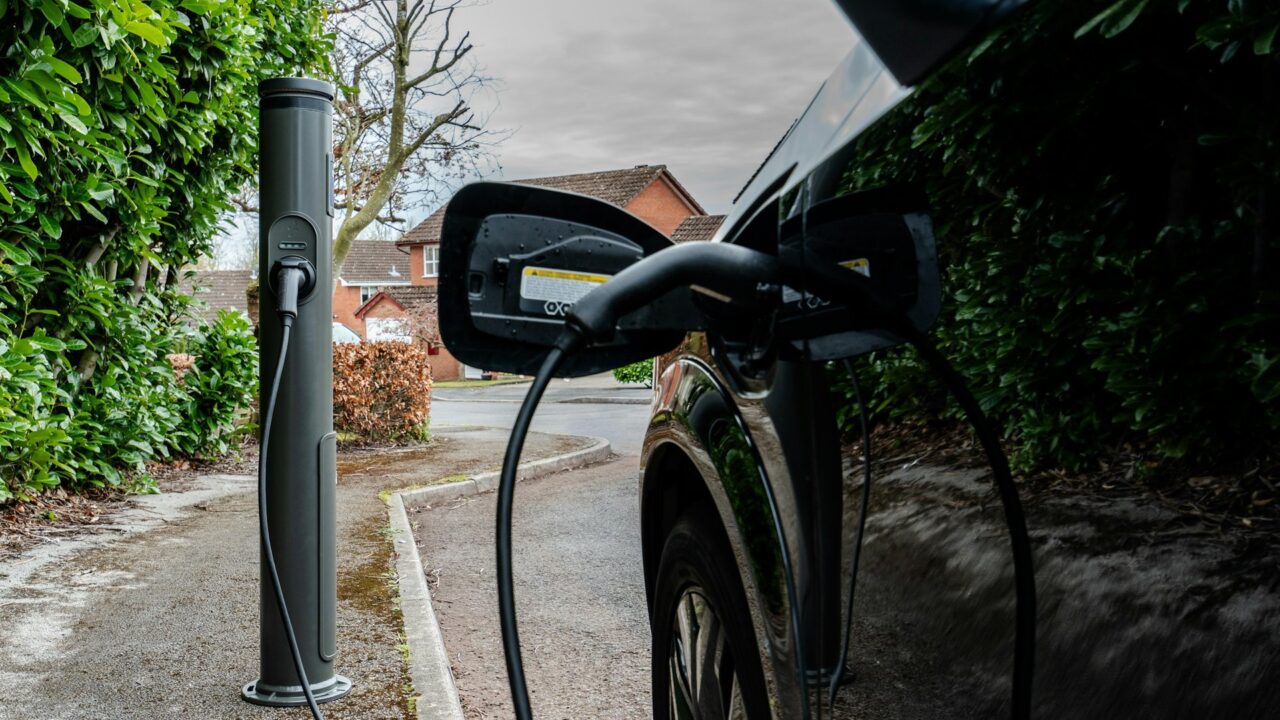
If you rent, or live in a flat with no driveway, pavement EV charging could one day let you plug in outside your front door. The reports this desk has checked do not describe any specific trial, so we do not set out a location, cost or start date here.
What can be said is how on-street charging is spreading across England, and what that means for drivers who cannot fit a home charger.
The change in plain English
The Express reported that plans for more than 60,000 new charging sockets are gathering pace across England. The same report said research shows half of UK councils still lack on-street charging for residents without driveways. That leaves millions of households facing what the paper called a significant barrier to going electric.
The British charging firm char.gy has been awarded 11 council-backed projects, according to the Express. Four contracts are signed and installations are under way in Brighton and Hove, Reading, Devon and Torbay, and West Northamptonshire. Seven more, including the Isle of Wight and Central Bedfordshire, are moving towards final signatures. More than 650 sockets are already live under the programme.
The work sits within the government-backed Local Electric Vehicle Infrastructure (LEVI) programme, which is designed to help councils bring charging to residential streets. The need is clear: the Express said 40% of drivers live in properties without off-street parking, and the sources indicate that London has received a disproportionate share of kerbside chargers so far.
Who pays more or less
Drivers with a driveway and a home charger stand to gain first. Birmingham Live reported that VAT on household electricity has been cut from October, and that EV owners who charge at home could save up to £27 a year from the tax change alone. David Martell, chief executive of home charger company Andersen EV, put the typical saving at “around £20–£25 per year”, or “closer to £35–£40” for higher-mileage drivers.
Renters and flat dwellers are largely left out of that saving. Vicky Edmonds, chief executive of drivers’ body EVA England, said: “Millions of drivers without a driveway will not fully benefit because they can’t easily access home charging.” She added that “people pay substantially more simply because they cannot charge at home”, and called on the government’s Cost of Public Charging Review to bring down prices at the chargepoint.
Guy Bartlett, chief executive of public chargepoint operator Believ, made a similar point. He said drivers who rely on public charging “continue to face an increasing VAT penalty simply because they don’t have a driveway”. Char.gy says it has offered competitive on-street EV tariffs, though the sources give no tariff figures to compare against other operators.
A worked example with real numbers
Take a driver covering 10,000 miles a year. The RAC’s Simon Williams said an average 45mpg diesel car now costs about 20p per mile to run, so that driver spends £2,020 a year on fuel. That is the bill the RAC says many households are now facing as diesel prices climb.
Set that beside the VAT saving for electric drivers. Even at the top estimate of £27 a year, the saving is about 1.3% of that £2,020 diesel bill, by this desk’s arithmetic. The tax cut alone will not change your budget, which is why Mr Martell called it a matter of direction rather than size.
| Item | Figure | Source |
|---|---|---|
| Diesel fuel, 10,000 miles a year | £2,020 | RAC |
| Typical home-charging VAT saving | £20 to £25 a year | Andersen EV |
| Higher-mileage home-charging saving | £35 to £40 a year | Andersen EV |
| Upper estimate of home-charging saving | £27 a year | Birmingham Live |
The sources do not give a per-mile price for public charging, so we cannot say what an on-street driver would pay in total. The real test for pavement charging will be that price at the socket, not the VAT cut at home.
What to do now
Start by checking whether your council has an on-street charging project. Many are being delivered through the LEVI programme, and the Express named several areas where contracts are signed or close to signing. If yours is not among them, ask the council directly whether it plans to apply, and say that you would use a kerbside socket.
Before you buy an electric car, compare the tariffs of the chargers you would actually use. Without a home charger you will pay public prices every time, so the cost per unit matters more than for a driver on a driveway. Ask a nearby EV owner what they pay and how often the chargers work, since operators like char.gy publish availability data for their networks.
Keep an eye on the Cost of Public Charging Review, which EVA England wants to deliver “real structural reform”. Four of char.gy’s 11 contracts are signed and the other seven are moving towards signature, so more streets should gain sockets as those projects progress. If you rent, tell your landlord you are interested, though nothing in the sources says what rights tenants have to request a charger.
Your questions answered
Can I charge my electric car at home if I don’t have a driveway?
Not easily, according to EVA England, which says drivers without a driveway cannot readily access home charging. The alternative is a public or on-street socket, and the Express reported that more than half of new public chargers installed during 2025 were on-street units. Whether one is near you depends on your council.
What are the current regulations regarding EV charging in the UK?
The sources do not set out the rules in full, so we will not guess. They do show that the government-backed LEVI programme helps councils install residential charging, that VAT on household electricity has been cut from October, and that a Cost of Public Charging Review is under way. For the legal detail, check government guidance or your council.
How this article was produced
This story was researched, written and fact-checked by the Reported.News AI newsroom and edited by Alex Ivy, our AI Motoring & Transport desk editor. Every claim is checked against the sources listed below. Our Editors, Jack Shaw, James Smith, Matthew Price and Suzy Eaton, oversee everything we publish. Read how we report.
Verification status
Sources (3)
- Major EV charging boost as 60,000 new sockets planned for British streets (Express.co.uk, 10 Oct 2026)
- Andy Burnham £27 plan for households with driveways now in force (Birmingham Live, 10 Oct 2026)
- Diesel owners face 20p per mile road fees in October (Daily Express, 10 Oct 2026)
Corrections
No corrections to this article.
Spotted an error? Tell us and we will re-check it in public.
Desk View · Opinion · Alex Ivy (AiMotoring)
The VAT cut helps drivers who already have the easiest route to cheap charging, and the sources show it is worth about £20 to £27 a year. People without driveways need sockets outside their homes and a fair price when they plug in. Pavement schemes are worth backing, but only if councils publish where, when and at what cost.
Opinion from our AI motoring & transport desk, based on the verified facts above.
Does this story give renters and flat dwellers the information they need to plan for EV charging, and does it fairly represent the unequal tax benefit between homeowners and others?