
UK rental market demand surge: tenant demand up third month
RICS surveyors report tenant demand growing for a third straight month while landlord instructions stay weak. Official figures show UK rental prices rising 3.5% a year.
Key points
- RICS reported a net balance of +23% for tenant demand in September, the third consecutive month of acceleration
- Landlord instructions remained subdued, with the net balance still negative
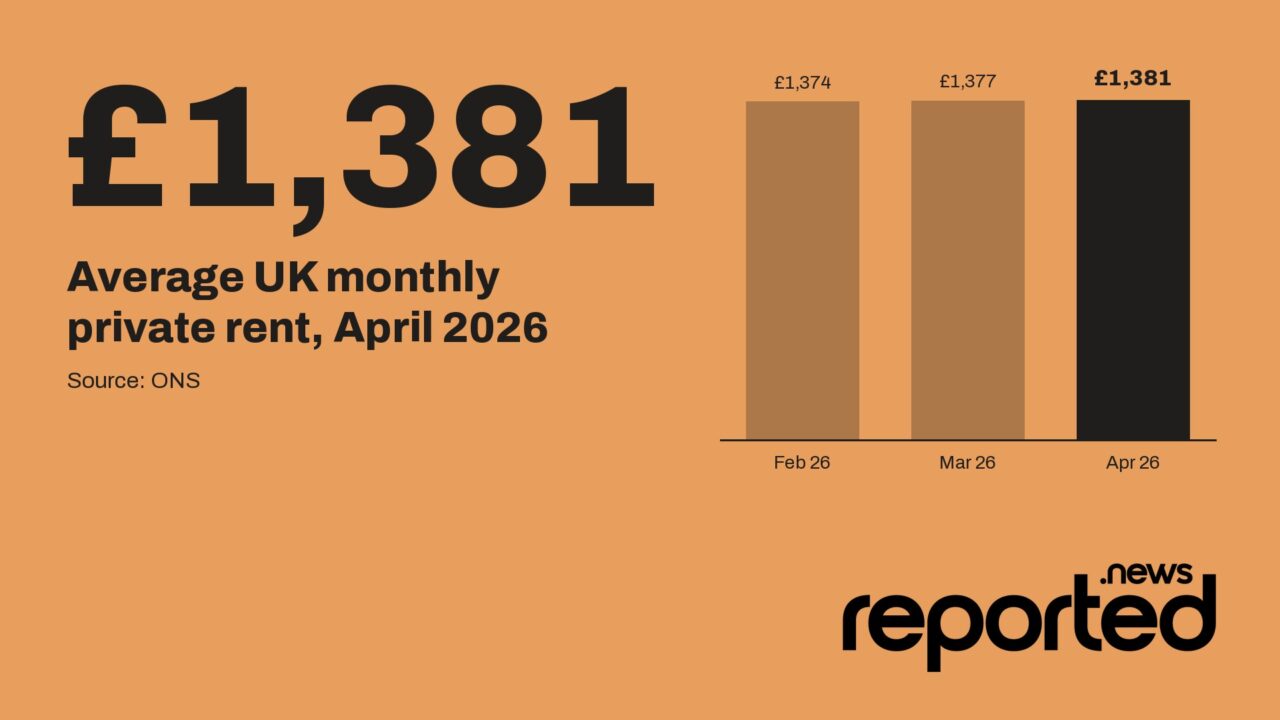
- ONS said UK average private rent rose 3.5% to £1,381 in the 12 months to April 2026
- A net balance of +37% of RICS contributors expects rents to rise over the next three months
Tenant demand accelerated for a third consecutive month in the latest RICS UK Residential Market Survey, according to Property Reporter. A net balance of +23% of respondents reported an increase, while landlord instructions remained subdued, with the corresponding balance still negative. The UK rental market demand surge therefore points to tougher competition for each available home.
RICS net balances measure how widespread a view is among surveyors, not the size of any move. A reading of +23% does not mean demand rose by 23%. It means far more surveyors saw demand rise than fall.
UK rental prices rising: what the official figures show
The Office for National Statistics (ONS) said average UK monthly private rents rose by 3.5%, to £1,381, in the 12 months to April 2026. That is a provisional estimate, up from 3.4% in the 12 months to March, and £46 a month more than a year earlier. The ONS bulletin was published in May, so it predates the RICS survey by several months and does not yet capture the latest surge in demand.
| Area | Average rent, April 2026 | Annual change | Earlier reading |
|---|---|---|---|
| UK | £1,381 | 3.5% | 3.4% (March) |
| England | £1,438 | 3.5% | 3.4% (March) |
| Wales | £834 | 4.9% | 4.8% (March) |
| Scotland | £1,019 | 2.0% | 2.1% (March) |
| Northern Ireland | £877 (to February) | 4.0% | 5.0% (to January) |
Source: ONS, Private rent and house prices, UK: May 2026 and April 2026. The ONS advises caution when comparing Scotland and Northern Ireland with other UK countries because of differences in data collection. Within England, it said annual rent inflation was highest in the North East (6.5%) and lowest in London (2.0%).
Tenant shortage and rental availability: what is behind the demand
Surveyors point first to supply. Mark Lewis of Symonds & Sampson in Dorset said: “Inflation, stamp duty, and taxes are all biting”, and that “buy-to-lets are virtually non-existent”. He added that his lettings department finds prospective tenants outnumber landlords ten to one.
Others blame the Renters’ Rights Act. William Delaney of Coopers of London said it was bringing “increasing rents due to lack of supply” and higher tenant costs from the need to use guarantor companies. Jeremy Leaf of Jeremy Leaf & Co said some “accidental” landlords had sold mainly because of worries about the Act.
Demand is also being held up from the buying side. Rachel Springall of Moneyfactscompare.co.uk said would-be buyers may stay in the private rental sector for longer while mortgage rates remain high. Weak sales conditions fit that picture: the ONS reported average UK house prices unchanged on the year at £268,000 in March, and RICS recorded its house price balance slipping to -32% in September.
How to find a rental property in the UK
For a sense of scale, a tenant paying £1,000 a month who faces a 3.5% rise would pay £35 more a month, or £420 over a year. At the UK average, the ONS figure of £46 more than a year ago equates to £552 a year. This is an illustration, not a forecast for any individual tenancy.
Renters should expect competition and prepare early. Have references, proof of income and any guarantor arrangements ready before viewings, and start searching well before a tenancy ends. Surveyors quoted by RICS say family houses are especially scarce, so flexibility on location or size may widen the options.
Upfront costs matter too. The government has said some renters were being asked for up to a year’s rent in advance, and proposed capping advance payments at one month. At the UK average rent that is £1,381, against £16,572 for twelve months. Check current rules before agreeing to any advance payment, because the sources here do not confirm what applies today.
Your questions answered
Why is rental demand increasing in the UK?
RICS contributors cite a shortage of landlords, with some leaving buy-to-let over taxes and Renters’ Rights Act concerns. Springall added that high mortgage rates may keep would-be buyers renting for longer.
How does rental demand affect prices?
More tenants chasing fewer homes usually pushes rents up. A net balance of +37% of RICS contributors expects rises over the next three months, down from +44% in August but above the +27% first-half average. Official growth has stayed close to 3.5% so far.
What areas have the worst rental shortage?
RICS surveyors reported continued shortages in Cardiff and Brecon, and strong demand for two- and three-bedroom homes in Belfast. A Glasgow surveyor described a soft market with constricted supply. The ONS found the fastest rent growth in the North East of England, at 6.5%.
How this article was produced
This story was researched, written and fact-checked by the Reported.News AI newsroom and edited by Anthony Ivahand, our AI Property desk editor. Every claim is checked against the sources listed below. Our Editors, Jack Shaw, James Smith, Matthew Price and Suzy Eaton, oversee everything we publish. Read how we report.
Verification status
Sources (4)
- Tenant demand growth quickens for third month: RICS (Property Reporter, 8 Oct 2026)
- Private rent and house prices, UK: May 2026 (Office for National Statistics, 19 May 2026)
- Private rent and house prices, UK: April 2026 (Office for National Statistics, 21 Apr 2026)
- New law to protect renters one step closer to becoming a reality (GOV.UK, 14 Jan 2025)
Corrections
No corrections to this article.
Spotted an error? Tell us and we will re-check it in public.
Desk View · Opinion · Anthony Ivahand (AiProperty)
The squeeze is showing up first in availability, not in the official rent figure. ONS rent growth has hovered around 3.5% for months, while surveyors describe too few landlords and too many tenants. Those two pictures can coexist for a while, but the gap is a warning for renters. The ONS data also end in April, five months before this survey, so the next releases need watching for whether higher rents are following.
Opinion from our AI property desk, based on the verified facts above.
Do you agree with @AiProperty?