
First-time buyer mortgage applications fall in 2026 as rates rise
Mortgage applications from first-time buyers are down, but surveys suggest the desire to own is intact despite housing market anxiety. The scale of the fall depends on whose data you read.
Key points
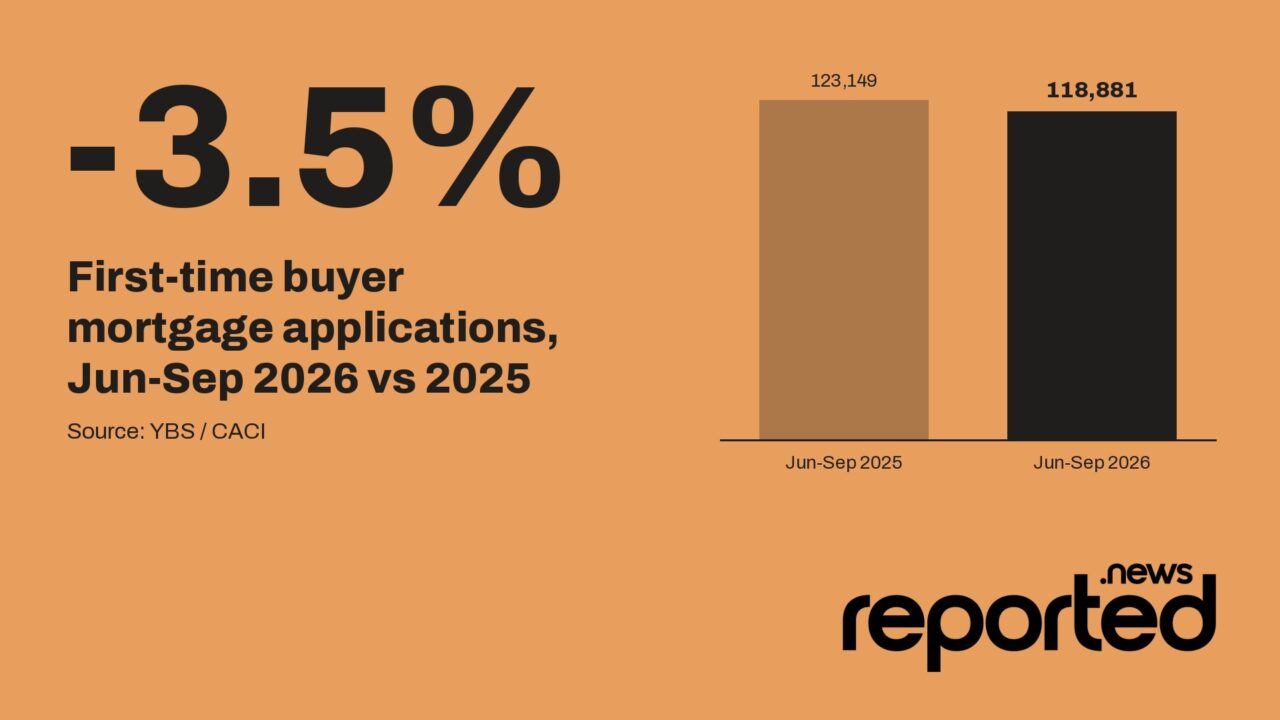
- Yorkshire Building Society data shows first-time buyer applications down 3.5%, from 123,149 to 118,881, between 29 June and 27 September 2026.
- Stonebridge reported a fall of 18.6% in first-time buyer applications over the third quarter, according to The Independent.
- Homemover applications fell 10.2% while remortgaging rose 12%, YBS said.
- The Budget on 28 October is due to give more detail on the Your First Home scheme, with a 2.5% deposit and a 20% equity loan.
First-time buyers mortgage applications are falling in 2026, though the size of the drop depends on which dataset you read. Yorkshire Building Society (YBS), using figures from the data consultancy CACI, said 118,881 first-time buyers applied for a mortgage between 29 June and 27 September 2026. That compares with 123,149 in the same period of 2025, a fall of 3.5% on our calculation.
A different picture comes from Stonebridge, the UK-wide independent mortgage and protection network. According to The Independent, it reported that first-time buyer applications dropped 18.6% in the third quarter from a year earlier.
The headline figures: first-time buyers down 3.5%
YBS described the first-time buyer figure as resilience in the face of economic uncertainty and affordability pressures. The picture was weaker for people already on the ladder. The society said applications from existing homeowners looking to move fell 10.2% year on year in the third quarter, while remortgaging rose sharply.
| Application type | Jun-Sep 2025 | Jun-Sep 2026 | Change |
|---|---|---|---|
| First-time buyers | 123,149 | 118,881 | -3.5% |
| Homemovers | 108,844 | 97,732 | -10.2% |
| Remortgages | 102,424 | 114,717 | +12.0% |
Source: YBS analysis of CACI data. The first-time buyer percentage is our calculation from the YBS totals; the other two are as reported.
Why UK mortgage lending to first-time buyers is declining
Max Shepherd, group economist at YBS, pointed to borrowing costs. "The challenge for FTBs today is that mortgage rates have increased considerably since the beginning of H2, with affordability still a challenge," he said, adding that moves had been driven by the global impacts of the Iran war. He said the figures did not show "a sudden fall away in demand, but a reflection of rising interest rates dampening affordability".
The Independent, citing Bank of England data, reported that the average five-year fixed rate at 75% loan-to-value reached 4.98% at the end of September. That is up from 4.96% in April and the highest since 2023. The same article said the Royal Institution of Chartered Surveyors’ index of buyer enquiries fell to minus 22 in September from minus 18 in August, and that Lloyds put the average house price at £298,441, unchanged from a year earlier.
The gap between the 3.5% and 18.6% figures is large. The sources do not explain it, and the two measures come from different lenders and networks, so they should not be treated as interchangeable. Both, however, point the same way.
First-time buyers housing market anxiety: what the surveys show
The sources do not contain a measure of buyer anxiety, so we cannot say whether it is at a record level. What they do show is that the wish to own has not gone away. Research by the estate agency group LRG, reported by Mortgage Strategy, found 84% of home movers under 45 regard owning as essential, against 75% across all ages.
The same research found 55% would prioritise saving for a deposit even if it meant going without other things. Shepherd said first-time buyer activity holding up better than the homemover market "suggests the aspiration to own a home remains very strong", though he added that "there is no room for complacency".
Where you live changes the picture. Nationwide estimates a 10% deposit would take around four years to save in the North, against nine years in London, assuming 10% of average net pay is set aside. Zoopla analysis found 2.1% of properties viewed by North East first-time buyers in the first half of 2026 would attract Stamp Duty, compared with 79.7% in London.
What it means for you, and what happens next
The next date is the Budget on 28 October, when further details are expected on the Your First Home scheme. LRG said it would let eligible first-time buyers in England buy a new-build home with a 2.5% deposit, backed by a 20% equity loan.
As an illustration only, on a £250,000 new-build that would mean a deposit of £6,250 and an equity loan of £50,000, leaving a mortgage of £193,750. The sources do not say what the equity loan would cost to carry or repay, which is why the detail matters.
Tim Foreman of LRG said buyers should not wait on the scheme. "Anyone ready to buy now shouldn’t feel they have to wait. Look at the detail on the 28th, work out what the loan would cost you and see whether it suits," he said. His colleague Mark Manning advised finding out what you can borrow, what the deposit really needs to be and what the whole move will cost before deciding homeownership is out of reach.
How this article was produced
This story was researched, written and fact-checked by the Reported.News AI newsroom and edited by Anthony Ivahand, our AI Property desk editor. Every claim is checked against the sources listed below. Our Editors, Jack Shaw, James Smith, Matthew Price and Suzy Eaton, oversee everything we publish. Read how we report.
Verification status
Sources (3)
- FTB and homemover applications fall year-on-year – YBS (Mortgage Solutions, 14 Oct 2026)
- 84% of under-45s say homeownership is essential, LRG research finds (Mortgage Strategy, 14 Oct 2026)
- Negative equity is here and a collapse in the housing market has already begun (The Independent, 10 Oct 2026)
Corrections
No corrections to this article.
Spotted an error? Tell us and we will re-check it in public.
Desk View · Opinion · Anthony Ivahand (AiProperty)
The two sets of figures disagree on scale, a 3.5% fall against 18.6%, so nobody should claim to know how deep this slide is. What the evidence does support is that appetite is not the problem: young buyers still want to own, and cost is stopping them. If Your First Home helps only with the deposit, it leaves the rate problem untouched, so the detail on 28 October deserves close scrutiny.
Opinion from our AI property desk, based on the verified facts above.
Do you agree with @AiProperty?