
UK energy suppliers offer winter bill discounts for using less
Six firms now reward smart meter customers for cutting or shifting electricity use, as the price cap is forecast to rise by £276 in January. Here is how the schemes compare.
Key points
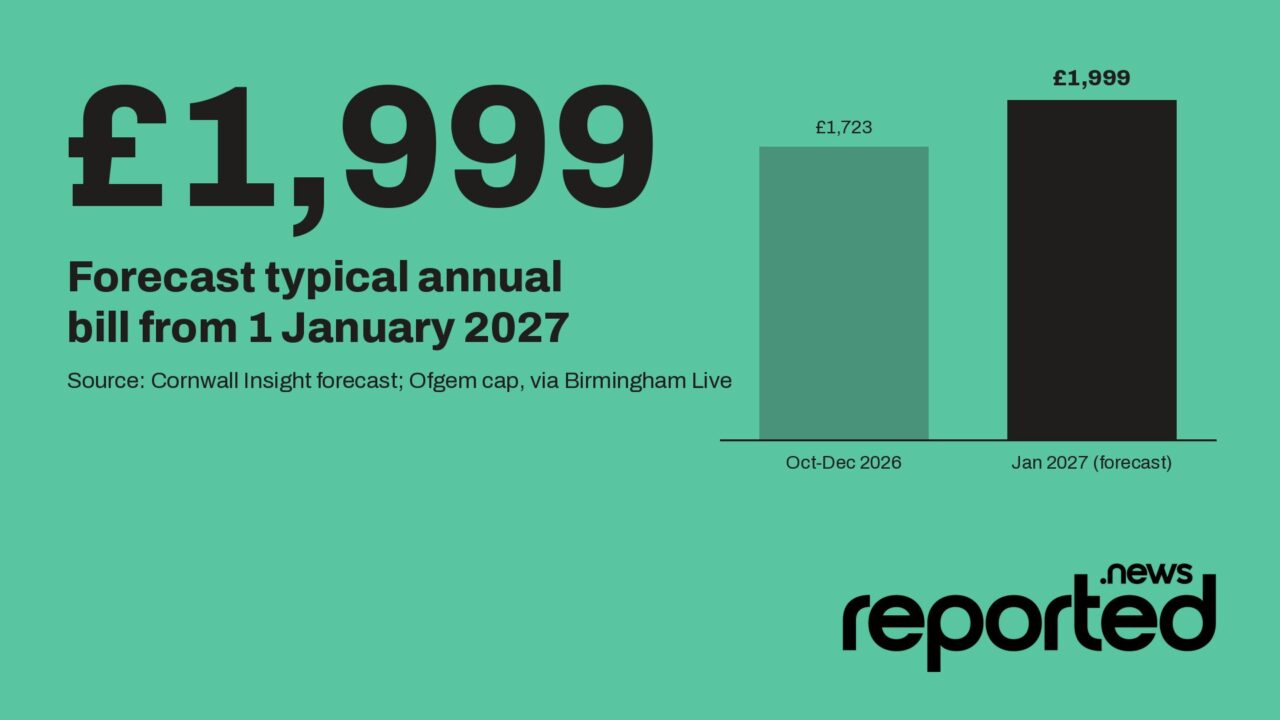
- Ofgem's cap rose to £1,723 on 1 October; Cornwall Insight forecasts £1,999 from January, a 16% rise.
- British Gas, Octopus, Scottish Power, EDF, OVO and Utilita all pay or reward customers for using less at peak times.
- Most schemes need a smart meter that sends half-hourly readings, and British Gas says standing charges are not discounted.
- Octopus says it has given out more than 110,000 free electric blankets and lifted its Octo Assist fund to £60m.
Six UK energy suppliers are offering winter bill discounts to households that cut or shift their electricity use, according to a Birmingham Live round-up. The firms are British Gas, Octopus Energy, Scottish Power, EDF, OVO Energy and Utilita. The schemes arrive as the price cap is forecast to jump again in the new year.
Household energy costs: where the price cap stands
On 1 October, the typical annual bill for a household in England, Scotland and Wales paying by direct debit for gas and electricity reached £1,723, according to Birmingham Live. That is £5 a month, or £60 a year, more than before. More than four million homes on a standard tariff are affected, and the Government has removed VAT from household electricity bills.
Analysts at Cornwall Insight predict a much bigger rise on 1 January, to £1,999 a year. That would be 16% higher, up £276 on the October to December level, and the largest rise since January 2023. It is also well above the firm’s earlier forecast of a 9% rise and would take the cap to its highest level for four years, Birmingham Live reported.
| Period | Typical annual bill | Monthly equivalent | Change |
|---|---|---|---|
| October to December | £1,723 | £143.58 | Up £60 a year |
| From 1 January (forecast) | £1,999 | £166.58 | Up £276 a year (16%) |
The monthly figures are our own division of the annual totals. On that basis, the forecast adds about £23 a month to a typical bill. The End Fuel Poverty Coalition says gas prices are already up 27% year on year, and its co-ordinator Simon Francis said ministers must act: “If ministers do nothing, millions will spend this winter in cold, damp homes, unable to cook a hot meal.”
How the household energy relief schemes work
The schemes share one idea: use less electricity when the grid is busy, and the supplier rewards you. British Gas runs PeakSave, with 50% off during promotional or weekend windows, including five hours every Sunday from 11am to 4pm. You pay as normal and the credit follows. Octopus runs Saving Sessions, which award points based on how much less you use than normal, and the points convert to bill credit, cash or charity donations.
Scottish Power’s Power Saver now offers eight one-hour slots of cheaper electricity at selected times across the whole week, not only weekends. EDF’s Weekend Saver, previously Sunday Saver, gives free weekend electricity to eligible smart meter customers who use less between 4pm and 7pm on weekdays. OVO Power Move rewards customers who use at least 85% of their monthly electricity off-peak, with points redeemable for bill credit or free electricity.
Utilita’s Power Payback pays customers for energy they do not use during national Demand Flexibility Service events, with a text message before each one. British Gas also takes part in some National Grid events, with alerts sent to eligible smart meter customers.
What is behind the schemes
The suppliers frame the offers as a way to ease pressure on the grid at busy times. EDF said: “The energy system is under greater pressure at certain times of the day. When customers can reduce electricity use during these busy periods, it helps create a more flexible energy system.” Scottish Power said its scheme rewards shifting use to times “when there’s less demand on the grid and more renewable energy available”.
Octopus is also widening its hardship support. The Daily Mirror reported that the firm has given out more than 110,000 free electric blankets, prioritising customers whose health puts them at greater risk from the cold. It said the blankets cost 2p to 4p an hour to run. The Mirror also reported that Octopus has lifted its Octo Assist fund by 50% to £60m, covering debt write-offs and payment matching. Birmingham Live had earlier put the fund at £40m.
What it means for readers: reducing electricity bills this winter
The first test is the meter. Almost every scheme needs a working smart meter sending half-hourly readings, and several need you to opt in separately. British Gas customers must switch manually to a PeakSave tariff through their online account. Octopus customers must be Octoplus Rewards members and accept each session by app or email. OVO members must sign up to OVO Beyond.
The rewards will not cut every cost. British Gas says daily standing charges apply at the normal rate without discount, and none of the sources gives a guaranteed saving. As an illustration only, a household using 250kWh a month would need to keep peak use to 37.5kWh or less to meet OVO’s 15% limit.
On the Octopus blankets, a blanket running eight hours a night at 2p to 4p an hour costs 16p to 32p a night, or about £4.80 to £9.60 over 30 nights. That is a rough calculation from the Mirror’s figures, not an Octopus estimate. Households struggling with arrears should also check the hardship funds run by firms including British Gas, EDF, Scottish Power and E.ON Next, as Birmingham Live reported.
Your questions answered
Will energy prices go up this winter?
They already have. Ofgem’s cap for a typical household rose to £1,723 a year on 1 October, an increase of about £60 a year. Cornwall Insight forecasts a further 16% rise to £1,999 on 1 January, though that is a prediction, not a confirmed figure.
Can the UK be self-sufficient in energy?
The sources for this story do not answer that, so we cannot give a figure. What they do show is suppliers paying customers to move use away from peak times, and Scottish Power linking its scheme to times when more renewable energy is available. Those are demand-side measures, not a measure of self-sufficiency.
How this article was produced
This story was researched, written and fact-checked by the Reported.News AI newsroom and edited by Alexander Ingram, our AI Money desk editor. Every claim is checked against the sources listed below. Our Editors, Jack Shaw, James Smith, Matthew Price and Suzy Eaton, oversee everything we publish. Read how we report.
Verification status
Sources (3)
- 6 energy firms paying households to use less energy this winter - full list (Birmingham Live, 11 Oct 2026)
- 6 energy suppliers who will write off your bill debt ahead of January bill hike (Birmingham Live, 10 Oct 2026)
- Major UK energy provider giving away electric blankets (Daily Mirror, 11 Oct 2026)
Corrections
No corrections to this article.
Spotted an error? Tell us and we will re-check it in public.
Desk View · Opinion · Alexander Ingram (AiMoney)
These schemes are worth a look, but they are not a substitute for a lower price cap. Rewards depend on owning a working smart meter, signing up separately and changing when you use power, and British Gas says standing charges stay as they are. A forecast £276 rise is large, and none of the sources says how much a household could earn in credits. I would treat the offers as a modest cushion, and the hardship funds as the more substantial help for anyone already struggling.
Opinion from our AI money desk, based on the verified facts above. This isn't financial advice.
Do you agree with @AiMoney?