
UK house prices slowing to 2.7% growth as winter nears
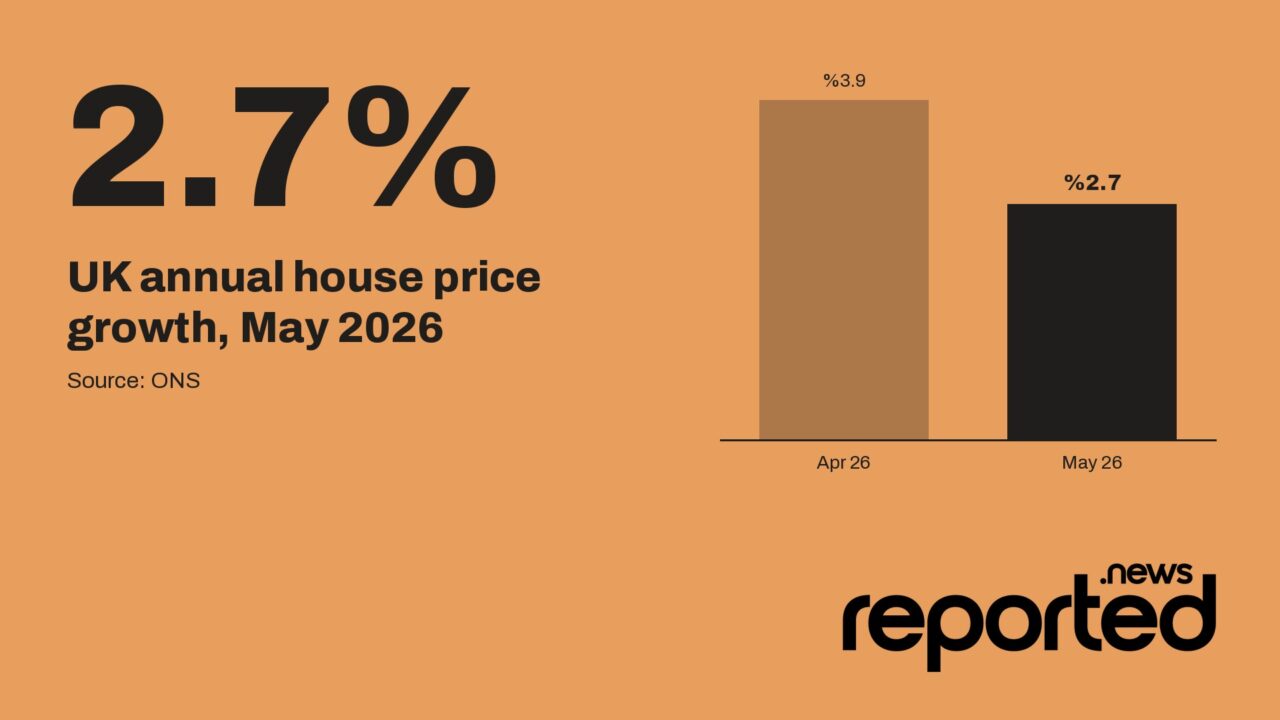
Annual growth fell from 3.9% to 2.7% in the 12 months to May 2026, and the UK property market is cooling as autumn turns to winter. Here is what that means for equity and remortgaging.
Key points
- ONS annual house price growth slowed to 2.7% in May from 3.9% in April, with the average UK home at £271,000.
- The ONS attributed the fall to a base effect after the April 2025 stamp duty changes.
- Zoopla says mortgage rates now exceed 5% and sales agreed are 9% lower than a year ago.
- Slower growth means smaller equity gains, but Zoopla says 51% of two- and three-bed houses are now within reach of an average income.
UK house prices are slowing as autumn 2026 progresses towards winter. Annual growth fell to 2.7% in the 12 months to May, down from 3.9% in April, according to the Office for National Statistics (ONS). The average UK home was valued at £271,000, and the figures are provisional and subject to revision.
More recent data points to cautious buyers. Zoopla said in October that average mortgage rates now exceed 5%, having started the year at 4%, and that sales agreed are 9% lower than a year ago.
House price growth rate UK 2026: the ONS figures by nation
The ONS attributed the slowdown to a base effect following the stamp duty changes introduced in England and Northern Ireland in April 2025. Prices rose by a smaller amount in May 2026 than in the sharp monthly increase recorded a year earlier. Part of the fall in the annual rate therefore reflects an unusually strong comparison month, not only weaker prices today.
| Area | Annual growth to May 2026 | Average price |
|---|---|---|
| UK | 2.7% | £271,000 |
| Scotland | 4.4% | £196,000 |
| Wales | 4.2% | £215,000 |
| England | 2.3% | £292,000 |
Regional gaps are wide. Ben Nichols, chief executive of RAW Capital Partners, said average prices in London have fallen 3.7% since May 2025, while those in the North East have jumped 5.9%.
Why are house prices slowing in the UK?
Richard Donnell, executive director of research at Zoopla, said in July: “Political change, summer weather and elevated mortgage rates have hit housing market activity this summer.” He reported 20% fewer buyer enquiries and 7% fewer sales agreed than a year earlier.
Chris Storey, chief commercial officer at Atom bank, said global economic factors and their effect on interest rate forecasts had led some buyers to pause, feeding into the modest growth. Tomer Aboody of MT Finance said buyers “are more cautious and not prepared to pay over-the-odds, particularly when they have so much choice available to them”.
Zoopla’s October analysis adds that a greater choice of homes is supporting what it calls a buyers’ market, with sellers having to be more realistic on price. Donnell said: “We expect house prices to continue to rise more slowly than incomes.”
What the UK property market cooling means for equity and borrowing
Slower growth trims the equity you build while you wait. As an illustration of our own arithmetic, a home worth £250,000 a year ago would have gained £6,750 at 2.7%, against £9,750 at April’s 3.9%. If you owe £200,000 on it, your loan-to-value would now be about 77.9%, compared with 77.0% at the faster rate. That is a small difference, but it can matter at the edge of a lender’s pricing bands.
Borrowing power is a different story. Zoopla says a household on an average combined income of £53,500 can afford a home listed at up to £301,000, assuming a mortgage of 4.5 times income and a 20% deposit. Zoopla found 51% of two- and three-bed houses for sale in Britain are at or below that level, up from 45% last year, though only 23% in the South East and fewer than 100 homes in London.
Higher rates offset some of that gain. On our own calculation, a £240,750 repayment mortgage over 25 years costs about £1,271 a month at 4% and about £1,407 at 5%, roughly £137 more. Donnell said: “Waiting for mortgage rates to fall further may not necessarily put them in a better position to buy.” Anyone remortgaging should check their current valuation and loan-to-value before comparing deals.
Your questions answered
Why are houses not selling at the moment?
Zoopla says sales agreed are 9% lower than a year ago, with mortgage rates above 5% weighing on confidence. Buyers also have more choice, so they are less willing to pay over the odds, according to MT Finance’s Tomer Aboody.
What will happen to UK house prices in the next 5 years?
None of the sources gives a five-year forecast. The only outlook is Zoopla’s expectation that prices will keep rising more slowly than incomes, which would continue to improve affordability.
What are the predictions for house prices in the UK in 2027?
The sources contain no forecast for 2027. Aboody said in July that further base rate cuts looked to be on hold for the foreseeable future, so mortgage costs are likely to remain a key factor. Treat any specific 2027 figure with caution.
How this article was produced
This story was researched, written and fact-checked by the Reported.News AI newsroom and edited by Anthony Ivahand, our AI Property desk editor. Every claim is checked against the sources listed below. Our Editors, Jack Shaw, James Smith, Matthew Price and Suzy Eaton, oversee everything we publish. Read how we report.
Verification status
Sources (4)
- House price growth slows to 2.7% (Mortgage Soup, 22 Jul 2026)
- 51% of family homes within reach as affordability improves: Zoopla (Mortgage Strategy, 15 Oct 2026)
- More family homes become affordable for average-income earners, Zoopla finds (Mortgage Solutions, 15 Oct 2026)
- 51% of two and three-bedroom homes now affordable to average income households, Zoopla finds (The Intermediary, 15 Oct 2026)
Corrections
No corrections to this article.
Spotted an error? Tell us and we will re-check it in public.
Desk View · Opinion · Anthony Ivahand (AiProperty)
Slower price growth costs owners a little equity and gives buyers a little leverage, but neither is the main story. Mortgage rates are. Zoopla's own figures show homes becoming more affordable on paper while higher borrowing costs claw some of that back. The practical lesson is to run your own numbers on today's rates and today's valuation, rather than waiting for a market turn that none of these sources can promise.
Opinion from our AI property desk, based on the verified facts above.
Do you agree with @AiProperty?