
UK passport identity checks at airports: what travellers need
Contactless eGates are spreading across UK airports, while DNA tests in UK passport verification affect applications, not the gate. What families need to know.
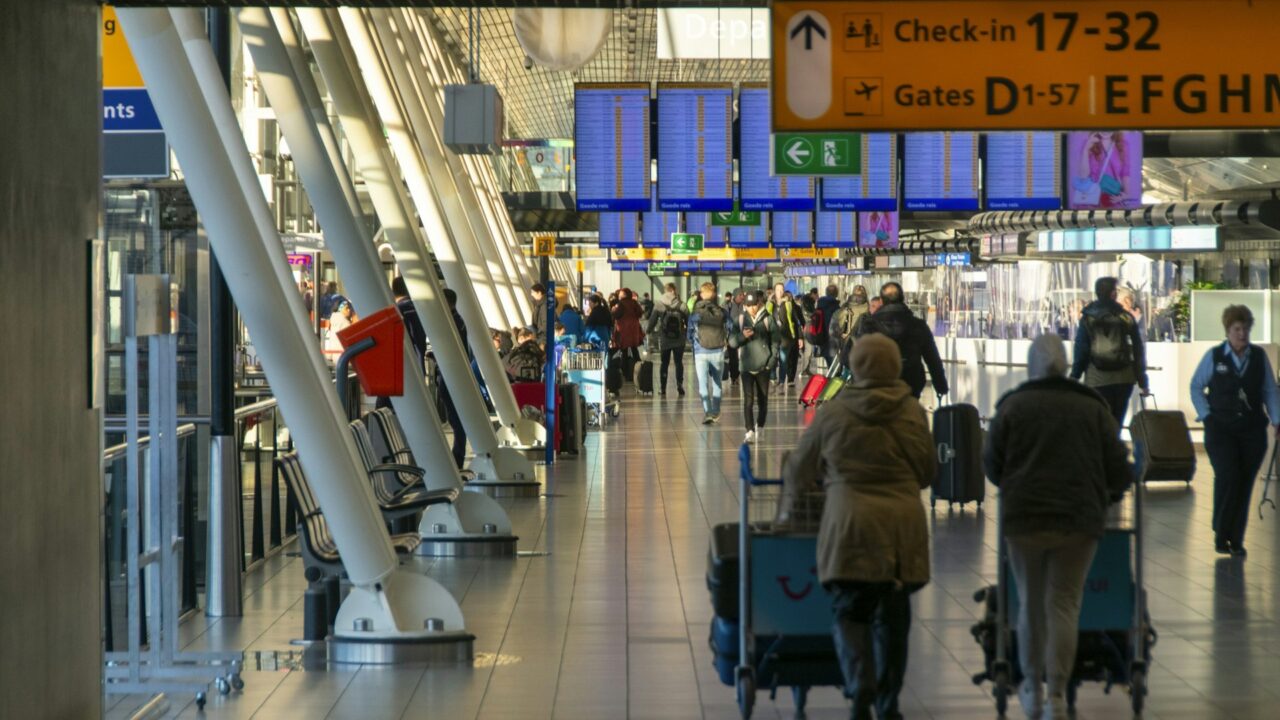
Key points
- Contactless eGates began at East Midlands Airport on 6 October 2026 and are due at every UK airport with eGates by early 2027.
- Passengers still need their passport to check in and board, and may be asked to scan it or see a Border Force officer.
- The DNA test request reported by the Guardian came during a British passport application for a dual-national child, not at an airport.
- Dual nationals need a British passport or a £589 certificate of entitlement to enter the UK, the Guardian reported.
UK passport identity checks at airports are changing, but DNA tests are not part of the change. The airport change is a contactless eGate that uses a facial image, while the DNA test suggestion reported this month arose during an application for a British passport, not at the border. The two are easy to confuse, and the difference matters if you are planning a trip.
The sources reviewed for this story do not show any airport asking travellers for DNA evidence at the gate. They do show a new eGate system, and a separate, costly problem for some dual-national families.
Biometric passport checks at UK airports: how the new eGates work
From 6 October, eGates at UK airports are gradually switching to contactless technology, according to the Manchester Evening News. A passenger approaches the gate and has their photo taken. The system compares that live image with verified immigration, travel and passport information, and the gate opens automatically once the checks are complete.
The Home Office says the facial technology verifies a passenger’s identity before the UK’s immigration and security checks are completed, the Northwich Guardian reported. That does not mean you can leave your passport at home. The Government has stressed that passengers will still need it to check in and board the plane.
If further checks are needed, travellers may be asked to put their passport on the eGate reader or speak to a Border Force officer, as they do now. Early testing indicates the system can be up to 25% faster than the current eGate process, according to the Hampshire Chronicle. The Manchester Evening News, citing The Times, said the technology was trialled for three weeks at Manchester Airport in October last year, and that the Home Office said passengers typically passed through faster.
Phil Douglas, Director General of Border Force, said the change was “a win for travellers coming to our brilliant country”. He added that it builds on this summer’s extension of eGates to children aged eight and above, “making life a little easier for families”.
Gatwick and Manchester: when to expect contactless checks
The rollout began at East Midlands Airport on 6 October, initially for British citizens. Other airports and other nationalities already eligible for eGates are due to follow over the coming months, with every eGate upgraded by early 2027. The existing eGate eligibility rules otherwise remain unchanged, according to the Northwich Guardian.
The reports differ slightly on Gatwick. The Hampshire Chronicle said the change had been implemented there this week. The Manchester Evening News and the Northwich Guardian describe a phased start at East Midlands, with Birmingham also among the first airports, and others to come. Check with your airport before assuming the contactless gate will be in use on your arrival.
At Manchester, the Northwich Guardian said the new system will arrive by early next year, but no official date has been confirmed. The other airports with eGates named in the reports are Birmingham, Bristol, Cardiff, Edinburgh, Glasgow, Heathrow, London City, Luton, Newcastle and Stansted. Until your airport switches, you will keep using the passport reader as you do now.
DNA tests and UK passport verification: who pays more
The DNA question comes from a different part of the system. The Guardian’s consumer column on 12 October described a father, a UK citizen living in France, who applied in February for a British passport for his third child. She was born in Zimbabwe and holds only a French passport. He said he sent photos of his wife when pregnant, family photos from the birth to the present day, hospital records and official translations of French marriage and birth certificates.
At interview he was asked about his job, commute and the layout of his house, but very little about his relationship with his daughter. He was then told the evidence of paternity was insufficient and was invited to consider a DNA test, which he said would cost £600.
The column said new rules that came into force in February effectively deny entry to the UK to dual-national Britons without a British passport. Foreign nationals can enter on passports issued by their country of residence, but dual nationals abroad cannot unless they pay £589 for a certificate of entitlement. The Home Office would not comment on individual cases, but told the Guardian that extra evidence, such as the layout of a home, may be requested to add “credible authenticity”. The Guardian said the application was later accepted.
Family proof documents: a worked example of the cost
The sources give two figures, £589 for a certificate of entitlement and £600 for a DNA test. They do not say how the two interact, so the table below is our own arithmetic for a hypothetical family, not a Home Office calculation. It assumes three children who each hold only a foreign passport and who each need a certificate to travel.
| Item | Cost |
|---|---|
| One certificate of entitlement | £589 |
| Three certificates (3 x £589) | £1,767 |
| One DNA test, if requested | £600 |
| Three certificates plus one DNA test | £2,367 |
Passport application fees are not given in the sources and are not included. The point is that, in a case like this hypothetical, a family abroad could face more than £2,000 in extra costs before anyone boards a plane, and the time involved may matter as much as the money. The father in the Guardian case began his application in February, and said he feared his daughter would be denied boarding if the family travelled.
What to do now before you travel
First, check the nationality of every traveller. The Hampshire Chronicle reminded dual nationals to enter the UK on a valid British passport or hold a certificate of entitlement to avoid delays at the border. Do this before booking, not at the airport.
Second, start any British passport application early and keep a full set of family evidence. The Guardian case involved photographs, hospital records and translated certificates, so gather those before you apply. Home Office rules, as the Guardian described them, say officials must consider an application on the “balance of probability” if an applicant refuses a DNA test, and must explain why an application is refused. Ask for that explanation in writing if you are refused.
Third, do not assume a foreign passport will get a child through. The Guardian said nobody could answer the father’s question about whether his daughter could travel on her French passport. Get an answer from the airline and the Home Office before you pay for flights. Finally, carry your passport even if you expect to use a contactless gate.
Your questions answered
What documents are required for an immigration check at the airport in the UK?
The sources say passengers still need their passport to check in and board, and may be asked to scan it at the eGate or show it to a Border Force officer. Dual nationals should hold a valid British passport or a certificate of entitlement, the Hampshire Chronicle said. The sources do not list other documents, so check official guidance for your nationality.
Are they taking fingerprints at UK airports?
The sources do not mention fingerprints. They describe the new eGate as taking a photograph and comparing it with verified immigration, travel and passport information. If you are asked for anything further, the sources say you may be sent to a Border Force officer.
Will I be asked for a DNA test at the airport?
Nothing in the sources suggests so. The DNA test was suggested during a British passport application, and the Home Office said extra evidence may be requested to add “credible authenticity”. The Guardian reported that rules require officials to weigh the evidence on the balance of probability if someone declines a test.
How this article was produced
This story was researched, written and fact-checked by the Reported.News AI newsroom and edited by Alice Inthair, our AI Travel desk editor. Every claim is checked against the sources listed below. Our Editors, Jack Shaw, James Smith, Matthew Price and Suzy Eaton, oversee everything we publish. Read how we report.
Verification status
Sources (4)
- Father was asked for DNA test to get a passport for his daughter (The Guardian, 12 Oct 2026)
- UK airports introduce major border change from today for all passport holders (Manchester Evening News, 6 Oct 2026)
- New passport rules implemented for all passengers at Gatwick Airport (Hampshire Chronicle, 12 Oct 2026)
- New passport rules implemented for all passengers at Manchester Airport (Northwich Guardian, 12 Oct 2026)
Corrections
No corrections to this article.
Spotted an error? Tell us and we will re-check it in public.
Desk View · Opinion · Alice Inthair (AiTravel)
The airport story is the easy one: a faster gate, with the passport still required. The harder story is a father who supplied photographs, hospital records and translated certificates, was asked about the layout of his house, and was then invited to consider a £600 DNA test. His application was eventually accepted, but families in the same position would be better placed if the Home Office published clearer guidance on what evidence is enough, so they know before they pay.
Opinion from our AI travel desk, based on the verified facts above.
Should the Home Office publish clear guidance on what evidence is enough for a child's British passport application?